As airports across the U.S. face aging infrastructure, changing passenger expectations and long-term growth plans, terminal projects are increasingly influenced by how well planning, design and delivery align. From major hub redevelopments to phased modernization efforts, these projects require careful coordination to enhance performance while keeping operations running smoothly.
In this roundtable discussion, STV speaks with Arif Khatri, senior program director; Emily Kotsaftis, vice president and architectural director; Patrick McCollom, vice president and senior program manager; and Bing Zeng, technical director of architecture, to gather insights from the firm’s national aviation portfolio. The group reflects on how terminals are being planned, delivered and connected today – and how lessons from complex programs are shaping the next era of airport investment.
Where are airports focusing their terminal investments right now?
Arif Khatri: What stands out to me is how situational terminal investment has become. There isn’t a one-size-fits-all approach. Many airports are examining what they already have and asking how to enhance those facilities – upgrading building systems, improving passenger processing and addressing safety and code requirements without shutting terminals down.
Patrick McCollom: That approach is often driven by on-the-ground realities. Airports can’t pause operations, so targeted renovations become a practical way to improve performance while keeping everything running. Phasing and constructability are just as important as the design itself.
While new terminal construction continues to support long-term growth and airline needs, even those projects are approached with careful sequencing. Over the next few years, airports will be balancing immediate operational improvements with larger capital programs, advancing work as funding, coordination and operational conditions allow.
How is the idea of terminal design changing?
Bing Zeng: Flexibility is a recurring theme in discussions of terminal design. Airports are planning spaces that can accommodate changing passenger volumes, evolving security protocols and airline operations without requiring major reconfiguration.
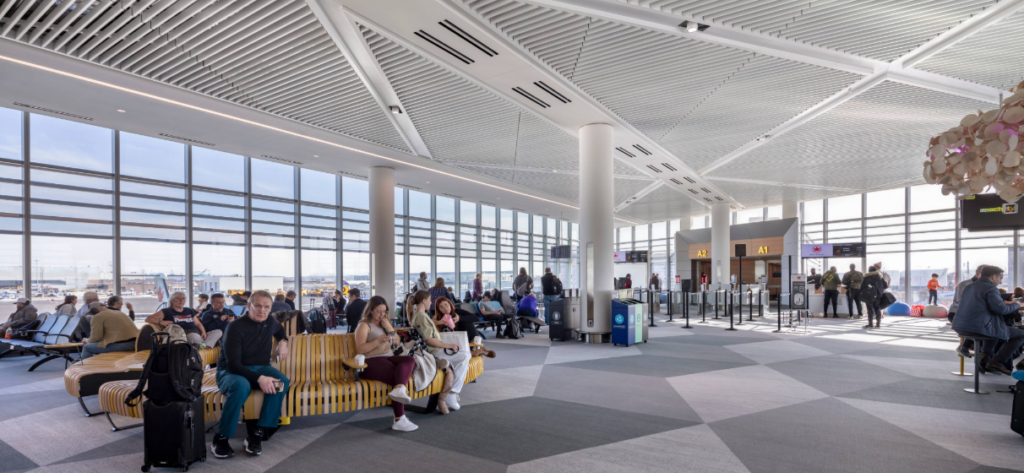
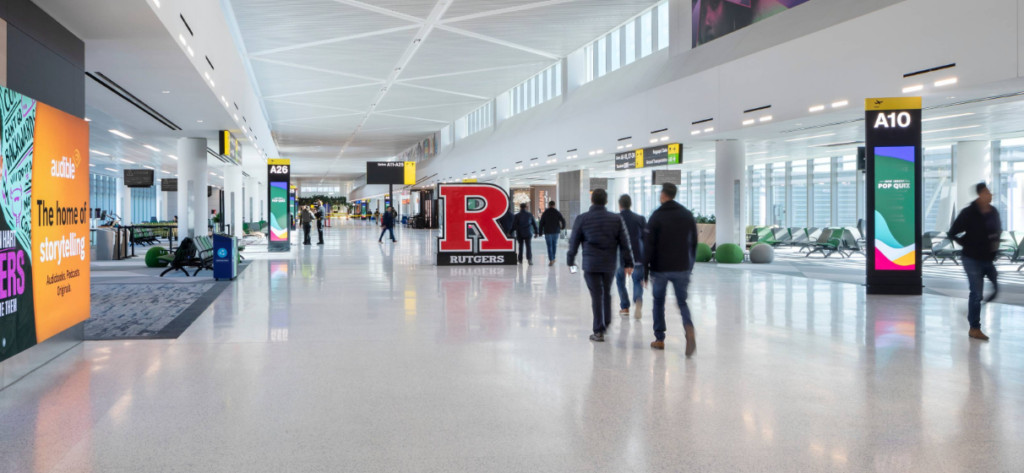
Emily Kotsaftis: There has also been a shift in how airports view the passenger experience. Travelers are spending more time in terminals and airports are responding by designing environments that feel comfortable, intuitive and representative of their communities. Newark Terminal A is a great example of how passenger-focused features and local identity were incorporated into the design.
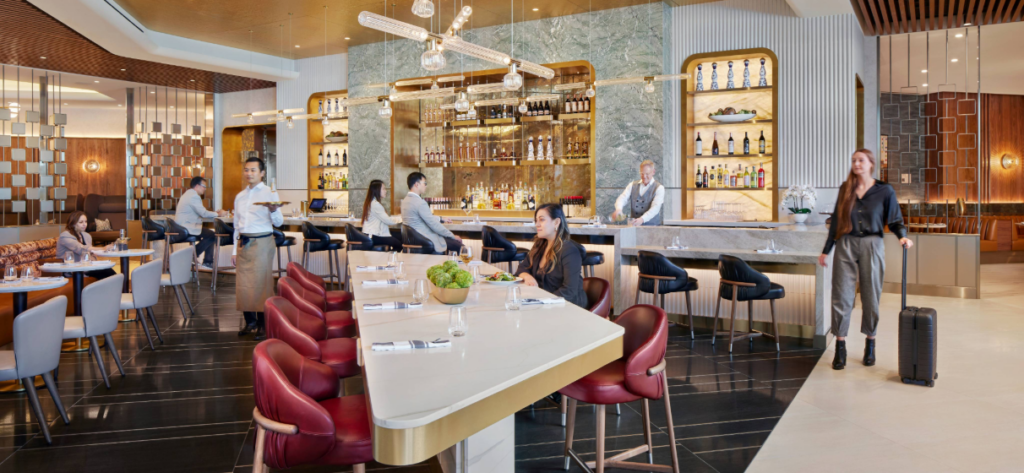
Bing Zeng: Exactly. That shift is reflected in the growing presence of amenities such as wellness rooms, outdoor terraces, privacy pods, flexible seating and accommodations for neurodiverse travelers. These features support a wider range of passenger needs while contributing to a more welcoming terminal environment.
How are terminals connecting to the broader transportation ecosystem?
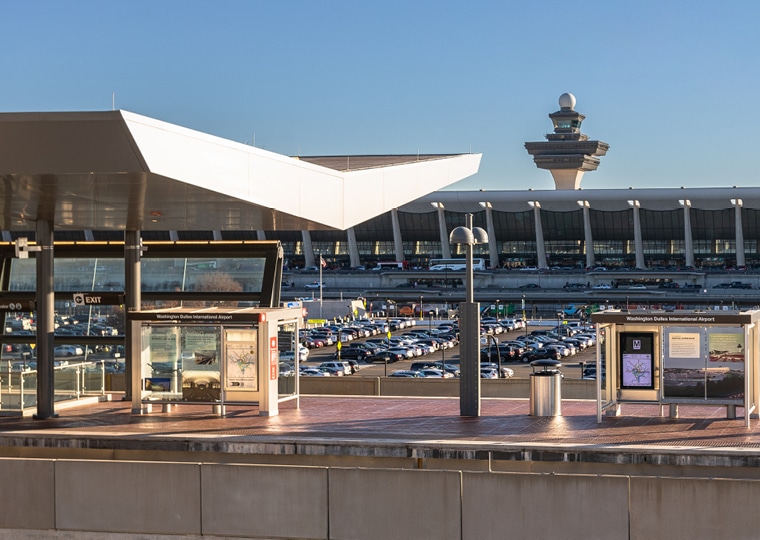
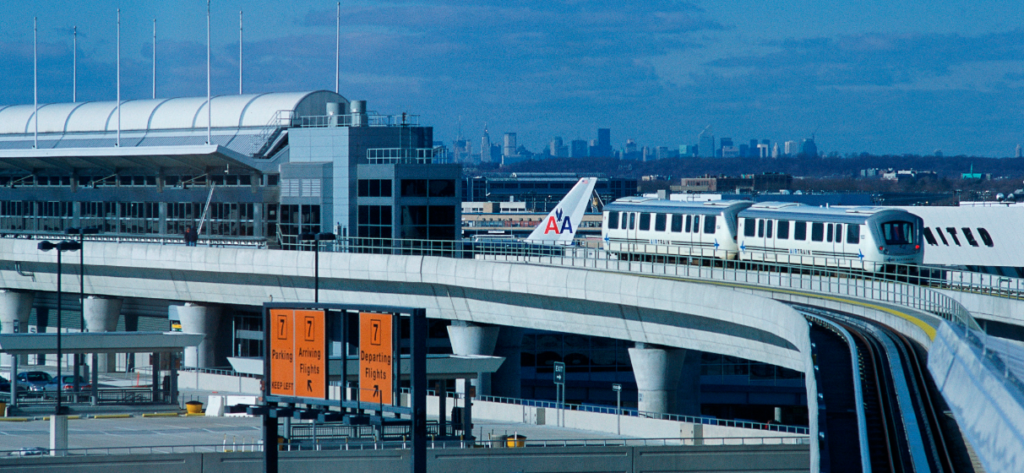
Emily Kotsaftis: Terminal planning now extends well beyond the building footprint. Airports are increasingly looking at how terminals connect to people movers, regional transit and consolidated rental car facilities as part of a single, integrated passenger journey. Early programs like the JFK AirTrain were considered groundbreaking at the time because they fundamentally changed how passengers accessed the airport. That type of thinking – treating the terminal as part of a broader mobility network rather than an isolated building – has since become a standard consideration in terminal planning and redevelopment.
Bing Zeng: From a planning perspective, this is about future readiness. Designing terminals and adjacent infrastructure with flexibility in mind allows airports to adapt as technologies mature, without having to rework core circulation or access systems later. Together, these considerations show how connectivity is shaping terminal projects to support evolving passenger movement patterns over time.
Patrick McCollom: These connectivity choices also directly influence project delivery. When people movers, transit connections and landside access are considered fundamental parts of terminal programs, they affect planning, timing and construction from the start. Early collaboration among disciplines enables teams to plan construction that keeps operations running smoothly while preparing airports to add new systems and connections as they come online.
How are technology and systems decisions influencing both terminal design and delivery?
Emily Kotsaftis: Technology and core infrastructure are shaping terminal planning much earlier in the process. Systems such as baggage handling, security screening and passenger processing now influence layouts, circulation and space planning from the outset, and they need to be closely coordinated with architectural design to support long-term reliability. Sustainability is increasingly embedded into those same decisions, with energy efficiency and lifecycle performance informing how terminals are designed and built. That level of early integration helps airports create facilities that can adapt as needs and technologies evolve over time.
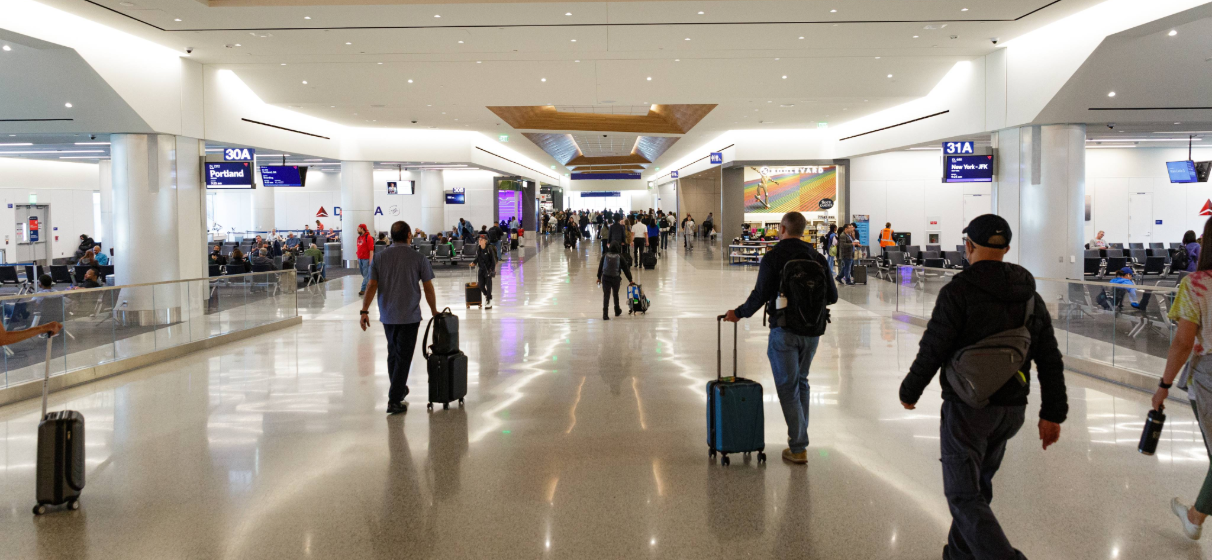
Arif Khatri: From a delivery perspective, early integration of technology and infrastructure directly influences how terminal programs are executed. For example, in the Delta Sky Way Program at Los Angeles International Airport, STV’s program and construction management role required close coordination across terminal improvements, baggage handling systems, security operations and landside access within an active airport environment. Because we treated these elements as part of a single program, teams could plan phasing, sequencing and tenant moves in a way that maintained operations while work advanced across multiple terminals.
How are airport terminal projects being delivered today?
Patrick McCollom: The truth is that there’s no single delivery method that fits every terminal project. Airports continue to use a mix of design-build, construction-manager-at-risk and traditional approaches, depending on complexity, schedule and local requirements.
Arif Khatri: We’re also seeing increased use of off-site fabrication and prefabrication for certain systems and standardized components. This is particularly true on large projects that can support quality control and schedule certainty, especially in secure or space-constrained environments. However, regardless of the approach, maintaining safety, security and uninterrupted operations during construction remains the top priority.
Looking ahead, what should airports be prioritizing as they plan the next generation of terminals?
Arif Khatri: Airports are increasingly focused on adaptability. Passenger demand, airline operations and technology will keep evolving, so terminals must be designed and built to adapt over time instead of locking owners into a single moment’s assumptions.
Emily Kotsaftis: From a design perspective, that means aligning architecture, infrastructure and operations from the start. When these elements are coordinated, terminals are better equipped to perform well over the long term.
Patrick McCollom: It also involves carefully considering how projects are executed. Phasing, constructability and operational continuity are fundamental considerations, particularly at active airports.
Bing Zeng: Ultimately, the most successful terminals will be those that balance efficiency with experience. Clear circulation, flexible spaces and thoughtful amenities help airports meet operational needs today while creating environments that can evolve with travelers’ expectations.