Across the southern U.S., state and local agencies face a common challenge: population growth is outpacing roadway capacity. As a result, infrastructure funds need to go further than ever before while residents are demanding transportation that is not only reliable but also sustainable and quick to implement.
Bus Rapid Transit (BRT) offers a compelling solution. It delivers rail-like performance at a lower cost, can be implemented more quickly, adapts to a range of corridor types and significantly expands access to jobs, healthcare, education and economic opportunity. As agencies seek strategies that can grow with their regions without the long delays or high costs of heavier modes, BRT has emerged as a transformative tool for changing how people travel and how communities evolve.
As one of the nation’s leading multidisciplinary consultants for BRT systems, STV brings decades of diverse expertise to help agencies navigate these shifting needs. This first installment in our BRT Forward series explores how the Richmond Pulse BRT established a new regional model for high-quality, high-impact bus rapid transit and how its principles are shaping the new wave of systems currently emerging across the South.
Building Foundations: What Pulse Made Possible
When the Pulse BRT system debuted in Richmond, Virginia, in 2018, it marked a turning point for mobility in the South. Designed by STV for Greater Richmond Transit Company and Virginia Department of Transportation as part of the design-build team led by Lane Construction Company, the 7.6-mile corridor was the result of a comprehensive, multidisciplinary effort to bring fast, reliable transit to one of the region’s most heavily traveled corridors.
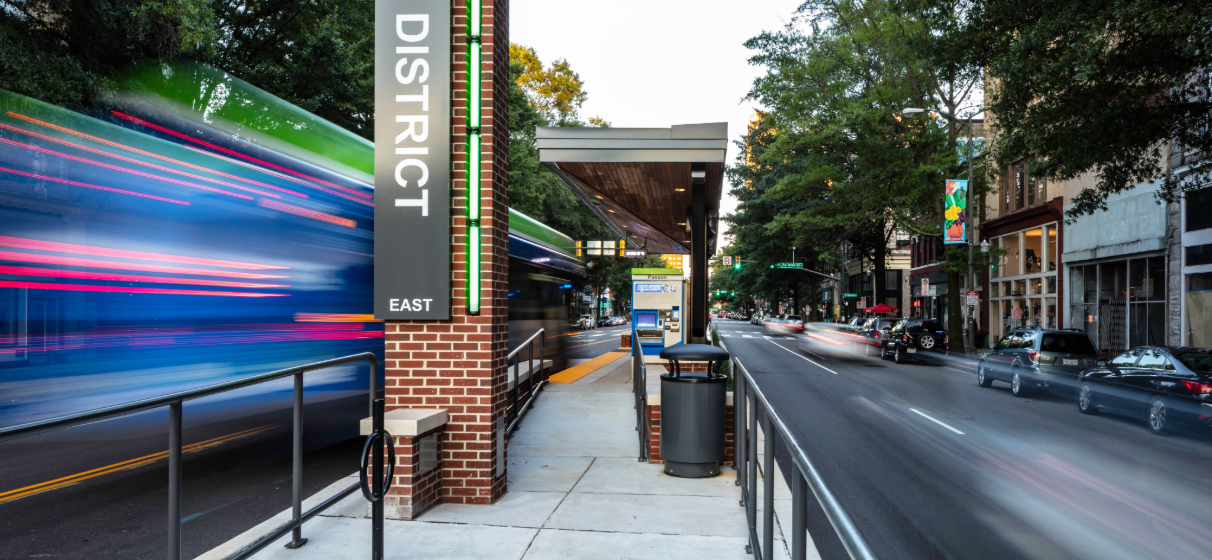
STV’s team engineered 2.3 miles of dedicated bus-only lanes and 26 accessible station platforms – a mix of median- and curbside-designed platforms shaped to fit the corridor’s tight urban constraints. Advanced traffic modeling guided the placement of lanes and signals, while transit signal priority was implemented at over 50 intersections to keep buses moving consistently, even during rush hours. The system’s communications backbone includes dual, fault-tolerant Ethernet networks connecting stations, real-time passenger information, CCTV, off-board fare collection and Richmond’s advanced traffic management system. Environmental and operational needs were met through low-impact stormwater features, utility coordination and an award-winning design-build delivery plan that minimized disruptions during construction.
“Delivering Pulse required close coordination across roadway design, signals, communications and operations,” said Suresh Karre, PE, PTOE, vice president at STV and traffic analysis lead on Pulse. “Each element was developed to support consistent bus performance while maintaining functionality for the broader corridor.”
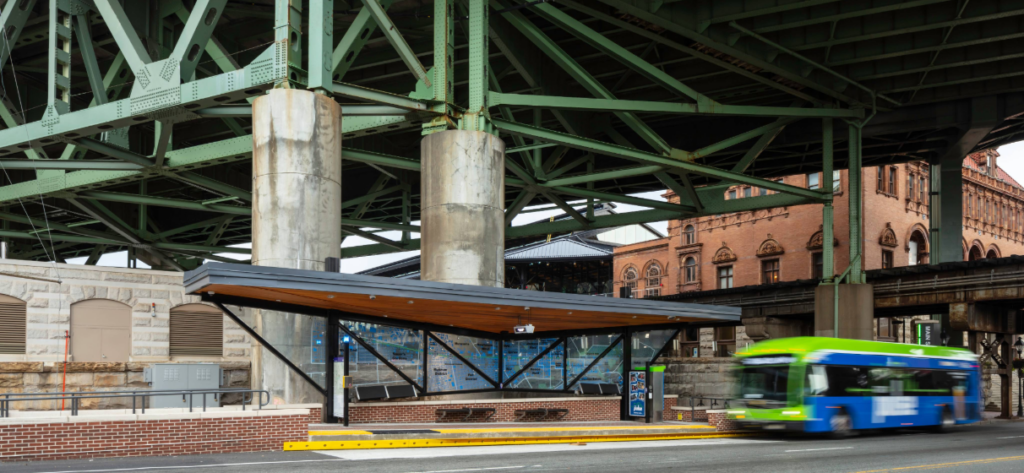
These integrated design decisions yielded immediate results. Travel times decreased by about a third, ridership quickly surpassed projections and buses operated with a level of reliability more typical of rail systems. The corridor’s clarity and predictability attracted new riders, boosted confidence among existing riders and showed that BRT could perform at a high level in a limited urban setting.
“Reliability is what ultimately builds trust in a transit system,” said Jacquelyn Lassiter, PE, PTOE, senior engineering operations manager at STV and deputy project manager on Pulse. “Pulse showed how dedicated lanes, signal priority and station design work together to support dependable service throughout the day.”
Most importantly, the benefits went far beyond the rider experience. Pulse improved access to jobs, healthcare, schools and commercial centers for communities that had long lacked reliable transit options. It also helped spark renewed interest in development along the corridor, showing how high-quality transit can support economic growth and foster more walkable, connected communities.
The success of Pulse established a trusted partnership with the client, leading to STV’s ongoing involvement in planning efforts to expand the corridor westward. The project has become a key reference for Southern communities as they weigh their long-term mobility options. Its success demonstrates that a well-designed BRT system can provide reliable travel times, promote equitable access to vital destinations and encourage reinvestment along main corridors. For areas experiencing rapid growth and evolving transportation needs, the Richmond experience clearly shows how careful design and coordinated project execution can create lasting value for riders and strengthen the urban fabric around them.
From Proven Performance to Regional Playbook
The success of the Richmond Pulse BRT provided agencies across the South with a clear example of what high-performing bus rapid transit can look like when design, operations and delivery are aligned from the outset. Pulse demonstrated that reliable travel times, strong ridership response and corridor-level improvements can be achieved within existing urban conditions – without waiting decades for implementation.
“One of the most valuable outcomes of Pulse was how transferable its design and operational principles proved to be,” said Scot Sibert, AICP, vice president and south transit director at STV. “Agencies were able to look at the project and see how similar approaches could be scaled or adjusted for their needs.”
In Fairfax County, Virginia, these principles are guiding the development of The One, a 7.4-mile BRT corridor intended to improve east–west connectivity and support one of the region’s key travel routes. STV is leading a joint venture serving as the Program Management Consultant (PMC) for the project, collaborating with county and regional partners to analyze potential ridership, assess traffic congestion mitigation strategies and evaluate housing and economic development scenarios to create a preferred implementation plan. By aligning corridor planning, station placement, roadway operations and multimodal connections, STV is helping to shape a system that can deliver near-term mobility benefits while remaining adaptable as travel patterns evolve.
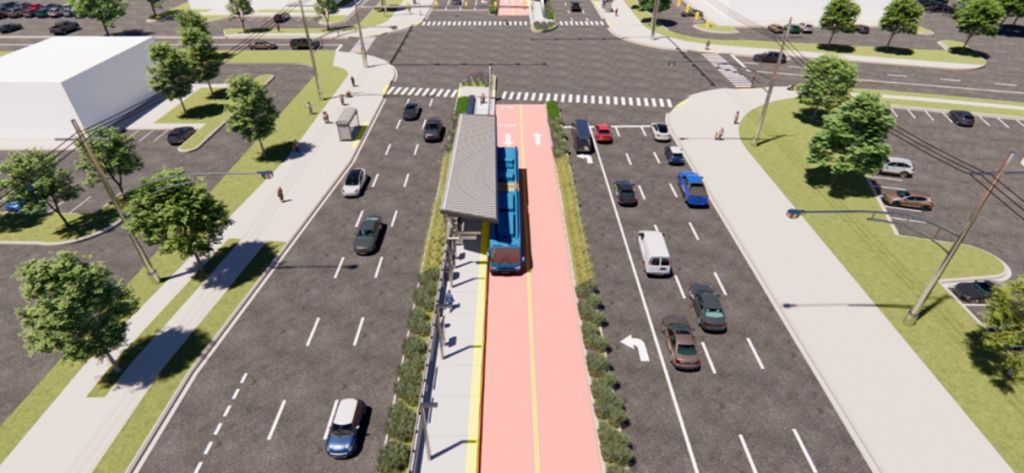
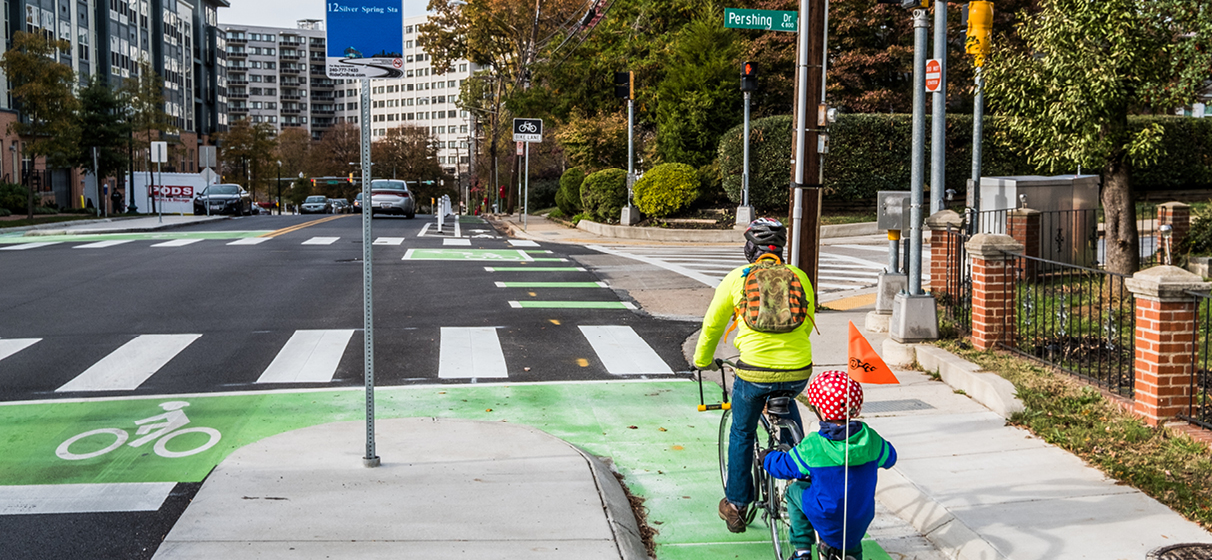
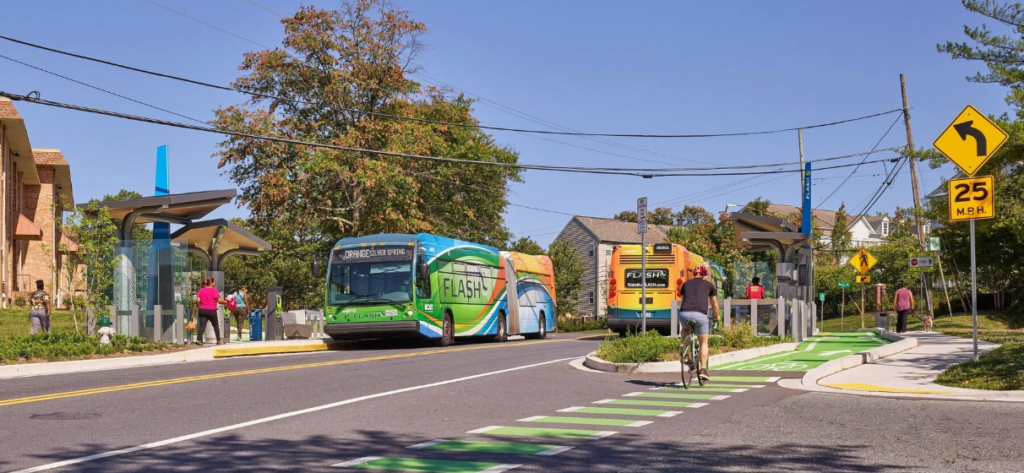
Similar ambition with BRT is underway in Montgomery County with the multi-corridor Flash BRT network. STV serves as PMC for the Montgomery County Department of Transportation, supporting the planning, coordination and phased delivery of eight BRT corridors comprising roughly 100 stops. The program is designed to provide fast, frequent and reliable service while connecting residential neighborhoods, job centers, activity hubs and regional transit facilities across the county.
“Montgomery County’s BRT program is exceptional in its scale,” said Jason Mumford, PE, AICP, vice president and planning director at STV. “Our team is helping navigate the complexity of managing multiple corridor efforts while maintaining a holistic program focus that aligns with the county’s mobility, equity and sustainability goals.”
Building on that program-wide framework, STV’s work on Flash includes corridor-level planning, ridership forecasting, environmental analysis and implementation support, helping the County advance projects in parallel while maintaining consistency across the network. The team is also supporting zero-emission bus planning, evaluating infrastructure needs, operational considerations and phased transition strategies to align future BRT service with Montgomery County’s sustainability objectives. Together, these efforts are shaping a network positioned to deliver reliable service today while accommodating evolving vehicle technologies and long-term growth.
The Carolinas, especially, are experiencing sustained population growth that is changing travel patterns across both established and emerging corridors. In fast-growing areas like the North Carolina Triangle and South Carolina’s Lowcountry, demand for reliable, high-capacity service is rising along routes that connect hospitals, employment centers and downtown districts. These trends are driving a new wave of BRT projects throughout both states – several of which now have STV playing a key role.
In Raleigh, North Carolina, STV will perform construction engineering and inspection (CEI) services on the Wake BRT New Bern Avenue project, a critical first phase in Wake County’s Transit Plan. Along with providing CE&I services, the firm will also conduct utility inspections and coordinating systems to help connect an underserved corridor to downtown Raleigh and the WakeMed Health and Hospitals main campus.
“This vital piece of infrastructure is all about serving residents in Raleigh and beyond,” said Kristin White, PE, CCM, engineering director for CEI services in North Carolina at STV. “As a resident of Raleigh, I’m proud to be part of a project that provides lasting benefits to the community.”
In South Carolina, STV was recently selected to support a Comprehensive Operational Analysis and Strategic Implementation Plan for the Charleston Area Regional Transportation Authority (CARTA) as a subconsultant to Nelson\Nygaard. This project will assess CARTA’s entire fixed-route network and update the 2018 Regional Transit Framework Plan developed by the Berkeley-Charleston-Dorchester Council of Governments, re-evaluating and reprioritizing BRT corridors across Berkeley, Charleston and Dorchester counties. STV’s work will assist CARTA in refining its system-wide strategy for high-capacity transit, including alignment with the Lowcountry Rapid Transit project – South Carolina’s first BRT line – as it moves toward construction.
“This project is a vital step in creating a modern transit system for the Charleston area and South Carolina as a whole,” said Andrew Fisher, PE, vice president and South Carolina area manager at STV. “With BRT projects like Lowcountry Rapid Transit progressing, the state and other Counties are watching Charleston closely as the flagship model for future transit investments.”
Next Stop: The Future
From Richmond to Montgomery County and throughout the Carolinas, STV’s work showcases the entire lifecycle of impactful BRT projects – from corridor planning and operational design to construction oversight and the integration of emerging technologies. By managing design, traffic flow, operations and community involvement, each project creates efficient, reliable systems that incorporate sustainability, multimodal connections and future-ready features such as zero-emission technologies. The lessons learned from these projects provide a practical guide for developing corridors that balance capacity, accessibility and long-term value for both current riders and future communities.
Future installments of BRT Forward will explore how these principles are being applied in other regions, spotlighting innovative strategies, emerging technologies and the creative problem-solving that helps communities transform their transit networks. Together, these stories highlight how high-quality BRT can move people, connect communities and support sustainable growth for years to come.