As public agencies and private owners invest in long-term infrastructure, many systems now operate under conditions very different from those originally assumed. While flooding and heat impacts have traditionally dominated programmatic conversations, emerging hazards such as snow-to-rain transitions, icing and shifting storm patterns are increasingly influencing design assumptions and lifecycle performance. That’s why addressing these challenges upfront is becoming a critical component of sound capital planning.
STV’s resilience advisory services and project controls experts work in tandem to help clients anticipate emerging challenges and translate climate intelligence into financially sound, scalable strategies. In this roundtable, Breanna Horne, vice president, principal and director of resilience; Ummul Khaira, engineering specialist, H&H modeling; and Brady Babbit, vice president and project controls director, discuss how STV brings advanced climate analytics, engineering insight and cost-schedule rigor together to support climate-ready infrastructure, even in regions where these risks have historically been rare.
Why are agencies starting to look beyond analyzing isolated flooding and extreme temperatures when evaluating climate risk?
Breanna Horne: Analyzing discrete flooding events or extreme temperatures is often the entry point to understanding climate risk. However, what we experience in reality are compounding, and cascading risks: things like back-to-back storms that saturate soils, rainfall coinciding with high tides, rain-on-snow events, shifting snowfall patterns and more frequent freeze-thaw cycles. It’s important that these risks are considered in design as these hazards can quietly drive maintenance costs, disrupt operations and shorten asset life if they’re not considered early in modernization programs. Our role is to help clients understand where those challenges are emerging locally and how they could impact performance, budgets and long-term resilience.
Ummul Khaira: In many regions, including areas not traditionally snow-dominated, winter precipitation is shifting from snow to rain or mixed events. That affects runoff timing, ice formation and how water interacts with soils and structures. If designs only assume rainfall, we’re missing a critical piece of future conditions.
How does advanced climate and Hydrologic and Hydraulic (H&H) modeling inform infrastructure decisions?
Ummul Khaira: H&H modeling for snow and mixed-phase precipitation allows us to simulate how snow accumulates, melts and contributes to runoff. Historically, snow modeling has often been excluded because of its complexity and the assumption that its impacts were either rare or operationally insignificant. But with the right datasets, we can provide clients with model outputs that show not just how much water they’ll see, but when and in what form. That information feeds directly into hydraulic design, drainage capacity and resilience strategies.
Brady Babbit: What’s powerful is that this science becomes actionable. Understanding future precipitation phase shifts allows owners to make targeted investments that reduce failure risk, avoid costly retrofits and improve reliability over the asset’s lifecycle.
What does this mean for regions not traditionally associated with snow and ice?
Ummul Khaira: Our analysis suggests greater variability in winter precipitation, including mixed-phase events and episodic snowfall in these regions has implications for drainage, pavements, rail systems and utilities, particularly where soils, slopes or systems were never intended to handle freeze-thaw or icing. The goal is flexibility: infrastructure that can tolerate a wider range of future conditions.
Brady Babbit: From a capital project delivery standpoint, these “low-probability, high-impact” events can be some of the most expensive if they’re not planned for. A single weather-related failure can ripple through cost, schedule and operations during construction and beyond. When climate risk is identified early, we can quantify it, price it and manage it instead of reacting after the fact.
How do resilience insights translate into financial and schedule benefits?
Brady Babbit: When we integrate climate risk into cost estimates, schedules and risk registers, clients gain predictability. That can translate into fewer change orders, more defensible contingencies and better long-term capital planning. Our role is to align climate intelligence with cost, schedule and risk so leaders can make informed decisions with confidence.
Can you share an example of how this plays out in practice?
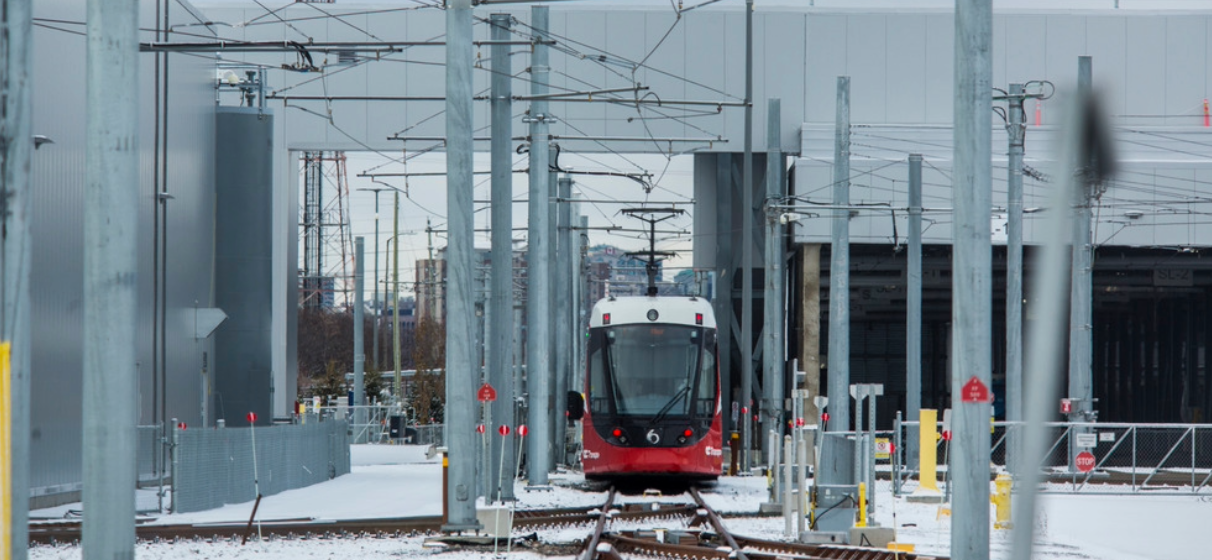
Brady Babbit: One example is STV’s long-standing work on a transit system in Texas. As agencies evaluate future upgrades, considerations like icing on overhead catenary systems become increasingly relevant, even in regions where it was once considered unlikely. Having this assessment in our back pocket allows us to proactively assess operational risk, cost exposure and mitigation strategies before they become urgent problems.
Breanna Horne: By pairing climate expertise with project controls, we help owners prioritize investments that protect budgets by anticipating changes in productivity in the field, minimizing maintenance costs and ultimately safeguarding an asset’s lifespan.