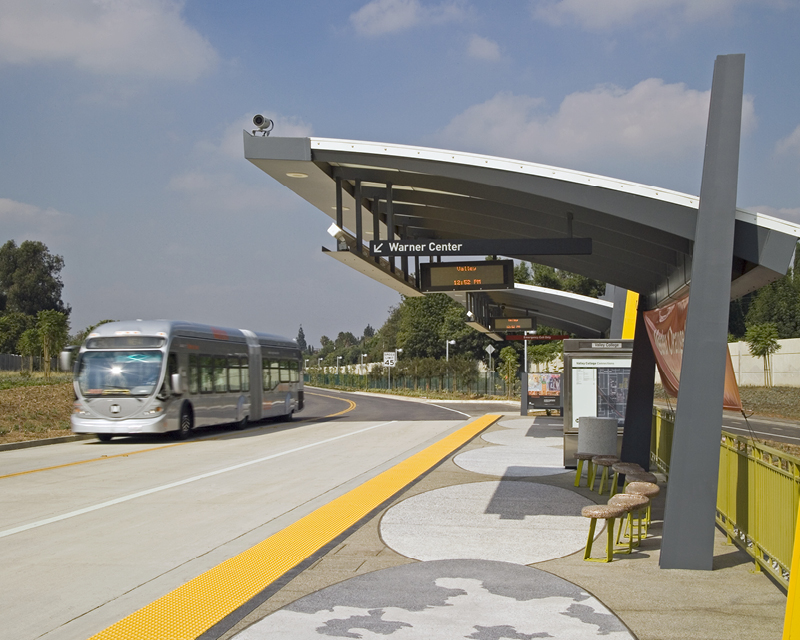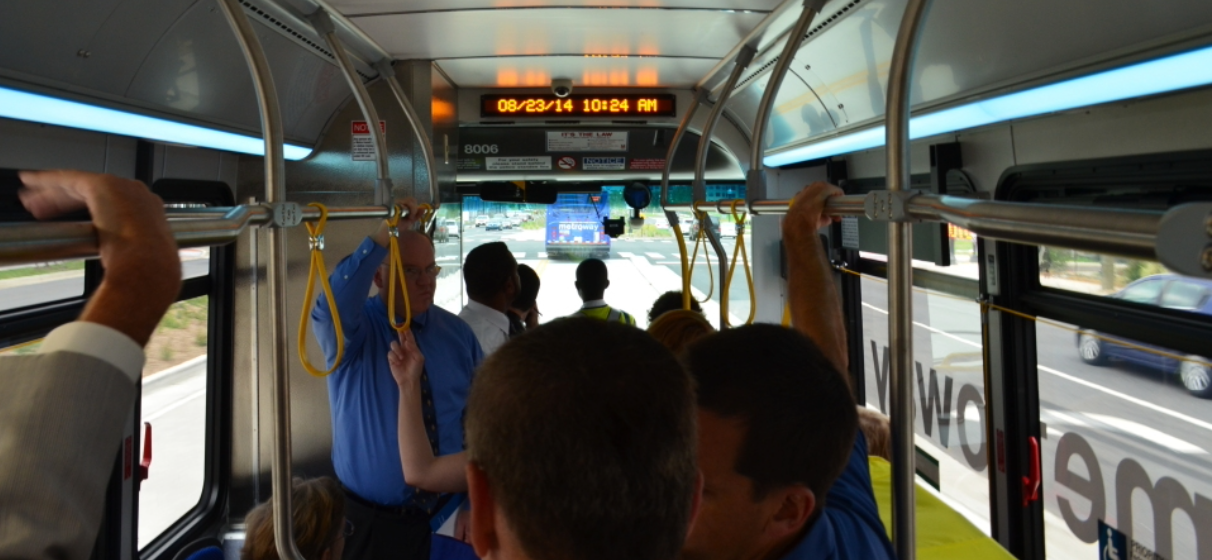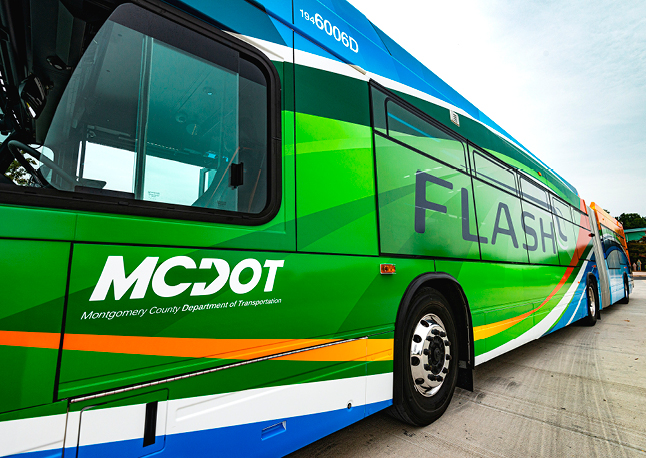
Across the U.S., agencies are turning to bus rapid transit (BRT) under increasing pressure to deliver high-capacity transit faster, with tighter budgets and less tolerance for disruption. Dedicated lanes, transit signal priority, premium stations and integrated technology allow BRT systems to deliver many of the performance benefits of rail – often with lower capital costs and shorter delivery timelines.
While BRT is often described as a “simpler” alternative to rail, that assumption rarely holds once construction begins. Modern BRT systems are highly integrated, built in active corridors and dependent on precise coordination between civil infrastructure, traffic operations, utilities and intelligent transportation systems. That complexity is increasingly visible on projects like Chapel Hill’s NS RAPID BRT, where dedicated lanes, premium stations and signal priority must be delivered in a constrained, highly active corridor.
That complexity has raised the stakes for program and construction management services (PM/CM) – where design intent meets live traffic, active utilities and daily operational demands. To explore how PM/CM supports successful BRT delivery, STV spoke with Kristin White, PE, CCM, engineering director, who brings two decades of experience overseeing construction and inspection for transit and transportation infrastructure projects.
1. BRT investment is accelerating nationwide. From a delivery standpoint, what’s driving that growth?
BRT has become a practical delivery option for agencies balancing speed, cost and political feasibility. It offers measurable improvements in travel time and reliability, but it’s also flexible enough to fit into existing urban corridors and funding environments. Unlike rail, BRT can be phased in, designs adapted to local conditions and projects moved forward on shorter timelines.
That flexibility is a major advantage – but it also means fewer standardized templates. Every corridor is different, and that variability has real implications once a project moves from design into construction.
2. BRT is sometimes described as “simpler” than rail. Why can that perception be misleading during construction?
From a construction perspective, BRT requires multiple systems to function together from day one. You’re integrating roadway reconstruction, stations, utilities, traffic signal upgrades and ITS – all while maintaining traffic and transit operations. Many BRT corridors are built block by block in live urban environments, increasing risk and requiring constant coordination.
Because BRT designs vary widely, agencies and contractors often have fewer established playbooks to rely on once construction starts. That puts more responsibility on the field team to recognize issues early and make informed, real‑time decisions that protect safety, schedule and long‑term system performance.
3. Where does program and construction management play the most critical role in managing that complexity?
Simply put, it’s where design decisions are tested against construction realities and future operations. On BRT projects, inspectors and resident engineers aren’t just checking quantities – they’re monitoring constructability, sequencing and how individual elements affect overall system performance.
For example, small deviations in lane geometry, curb placement or signal infrastructure can directly affect travel times and reliability. Strong CM helps ensure that what’s built in the field actually delivers the outcomes agencies and riders expect.
4. Many BRT projects rely on federal funding. How does a construction management team help agencies meet compliance requirements and protect that investment?
Federal participation brings additional oversight requirements around documentation, quality assurance and cost control. Construction management teams help agencies meet those obligations by maintaining accurate field records, reviewing submittals, tracking changes and verifying that construction aligns with contract documents.
That documentation is also critical to securing federal reimbursement. Complete, accurate records help agencies demonstrate compliance with funding requirements, protect reimbursement eligibility and provide a clear project record that supports accountability long after construction is complete.
5. Can you share lessons from past busway or transitway PM/CM projects that apply to today’s BRT programs?
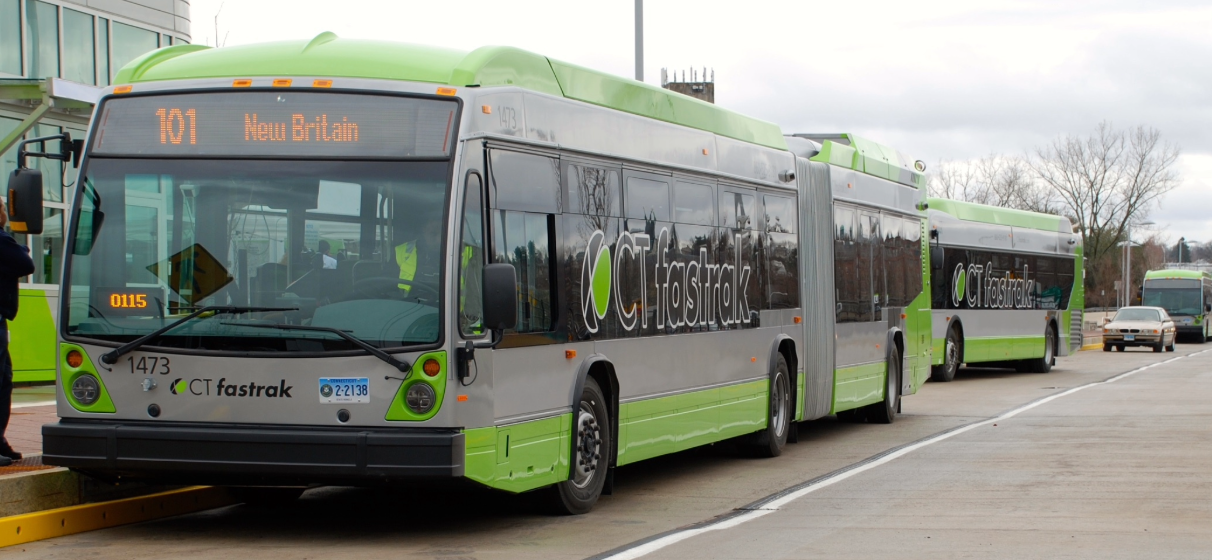
Projects like the Crystal City-Potomac Yard Transitway and the New Britain-Hartford Busway, where STV provided construction engineering and inspection (CEI) services, reinforced the importance of early coordination and continuous field presence on BRT corridors. These projects involved dedicated bus lanes, stations, utility relocations, traffic signal upgrades and construction staged to maintain access and mobility throughout the corridor.
What consistently made the difference was having experienced staff empowered to resolve issues quickly, coordinate with multiple stakeholders and keep construction moving without compromising safety or quality.
6. As projects like Chapel Hill’s NS RAPID BRT move into construction, what does “good PM/CM” look like on the ground – and where do you see agencies raising expectations?
It isn’t an abstract oversight – it’s experienced professionals on site, applying judgment as conditions change. It’s having dedicated staff in the field who understand how design decisions play out block by block, who can coordinate quickly across contractors, utilities, agencies and other stakeholders, and who know when an issue needs to be escalated versus resolved in real time.
Agencies are increasingly expecting PM/CM teams to anticipate challenges rather than react to them – especially on BRT projects built in active corridors. As systems become more complex and delivery schedules more compressed, that expectation is only going to increase.