After years of planning, coordination and construction, the Howard Street Tunnel Clearance Program is helping write a new chapter for freight movement along the East Coast.
For STV, the project represents nearly five years of leadership in program and construction management for an initiative that combined historic infrastructure, active rail operations and construction activities spanning three states. Alongside CSX and a broad coalition of federal, state, and local stakeholders, the firm helped deliver one of the country’s most ambitious freight rail improvement programs.
“The Howard Street Tunnel Clearance Program shows how targeted infrastructure investment can remove long-standing constraints on freight movement,” said Ted Coffey, PE, vice president and freight practice director at STV. “By improving access to the Port of Baltimore, it strengthens supply chains, supports economic growth and helps position the region for long-term success.”
Solving a Generational Transportation Challenge
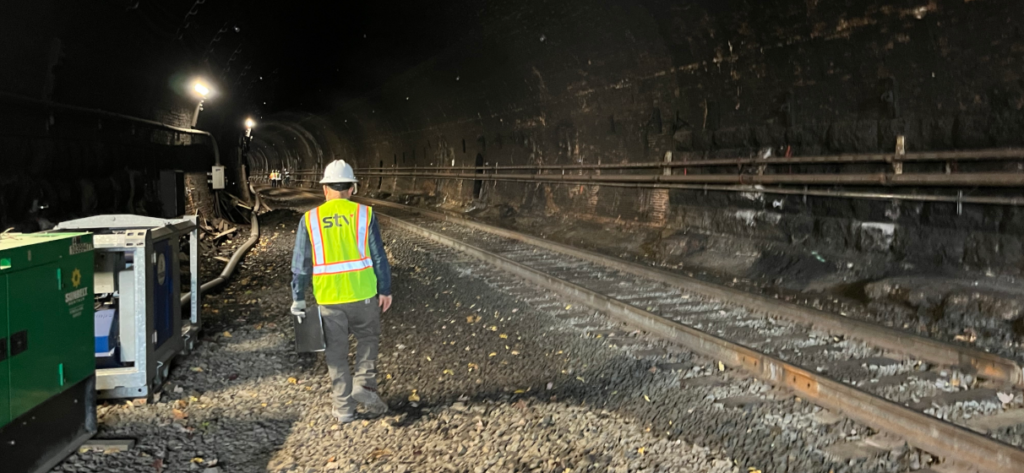
At the center of the program was the Howard Street Tunnel, a primary north-south freight rail link through Baltimore that had long played a key role in moving goods through Baltimore and along the I-95 corridor.
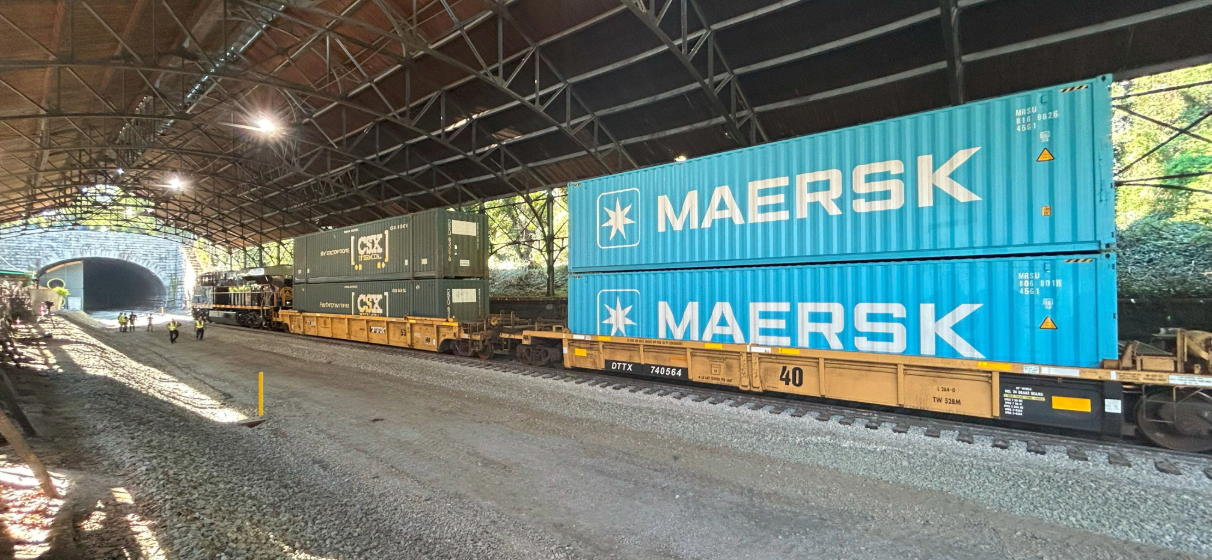
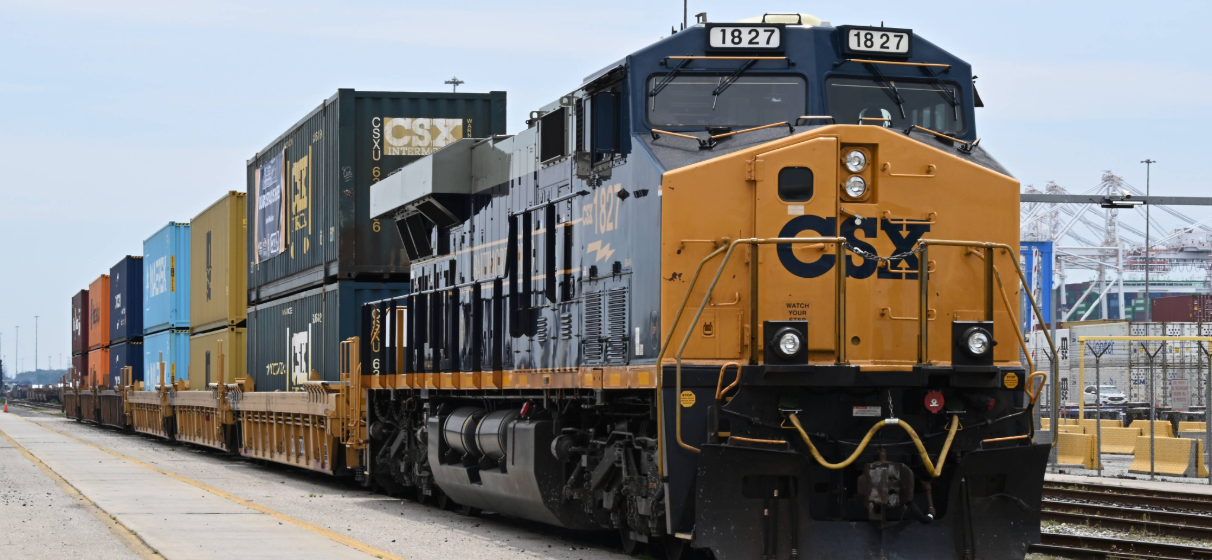
When the tunnel opened in 1895, it was not designed to accommodate today’s double-stacked intermodal trains. As shipping patterns evolved and freight volumes increased, the corridor became a bottleneck for modern rail operations – limiting the efficient movement of goods between ports, distribution centers and inland markets.
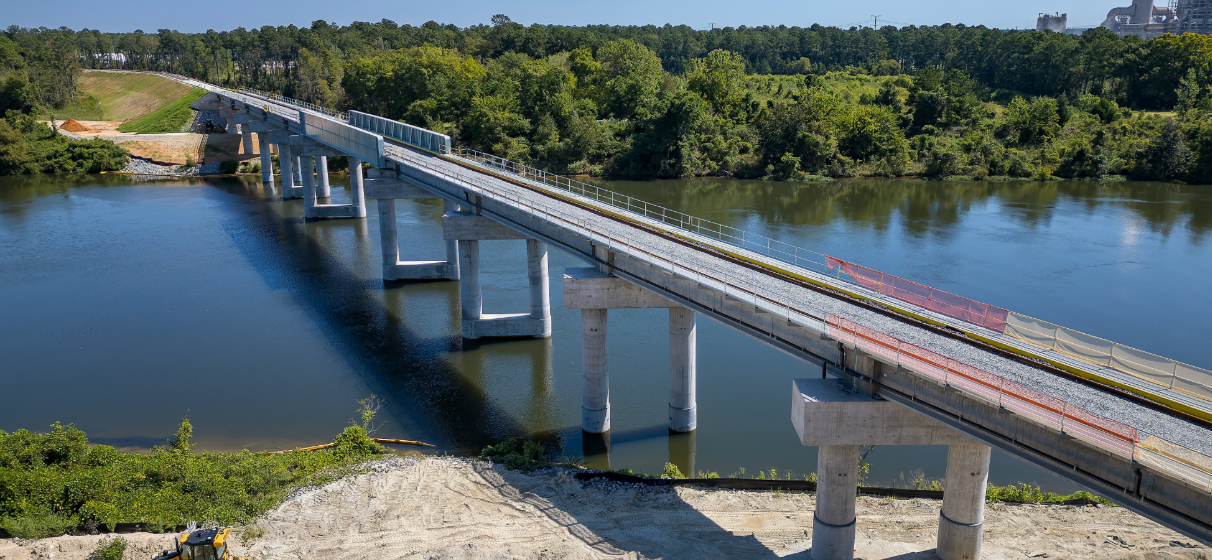
The Howard Street Tunnel Clearance Program was created to address that challenge through a series of coordinated improvements across Maryland, Delaware and Pennsylvania. In addition to the tunnel itself, the effort included clearance improvements at dozens of locations along the corridor, creating the infrastructure needed to support modern intermodal freight operations.
In total, the program encompassed 22 projects organized into 10 construction packages, including a mix of design-build and design-bid-build delivery approaches. This scale – paired with the need to maintain active rail operations – required a highly coordinated delivery approach across multiple contracts and jurisdictions.
Coordinating a Corridor-Wide Transformation
By 2023, construction was underway across multiple work sites stretching from Baltimore to Philadelphia. For STV, the assignment required coordinating schedule management, quality oversight, construction inspection, stakeholder engagement and project controls while helping maintain active freight operations throughout much of the work, aligning contractor sequencing, rail operations and stakeholder requirements in real time.
“Success hinged on bringing together dozens of stakeholders with a shared focus on delivery,” said George King, senior construction manager and project manager. “From railroad operations and contractors to public agencies and community partners, everyone had a role in keeping this effort moving forward despite its scale and complexity.”
The work was uniquely challenging. Throughout much of the program, freight operations remained active while improvements advanced across the corridor, requiring teams to carefully balance project delivery with operational needs. Multiple construction packages advanced simultaneously, each presenting different technical and logistical obstacles.
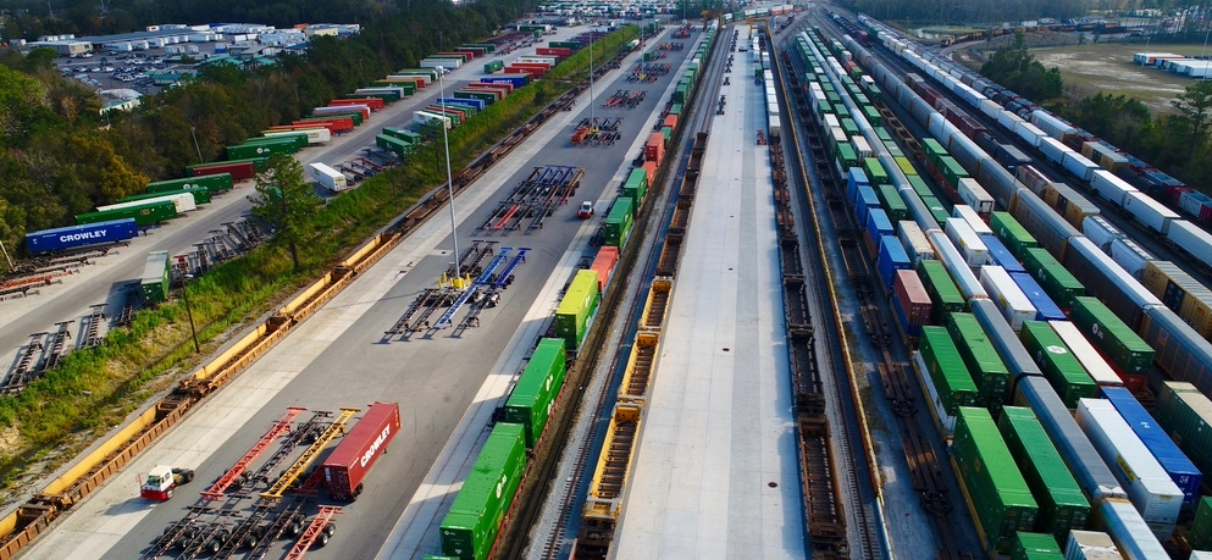
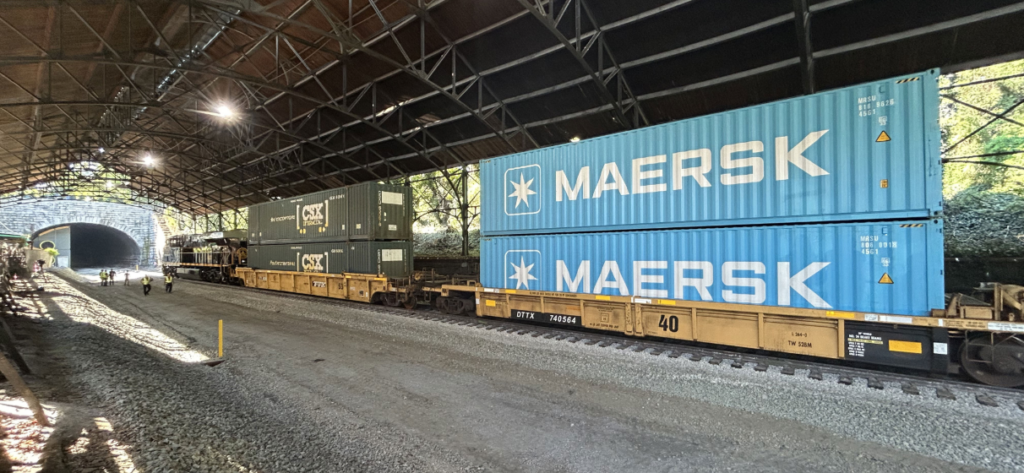
The first major sign that those efforts were paying off came in late 2024, when CSX launched double-stack rail service for trains entering the northern portion of the Port of Baltimore. The milestone offered an early glimpse of the program’s long-term impact, showing how the completed improvements would enhance freight access to the port and create more efficient connections to destinations across the CSX network.
Still, the most visible and technically demanding phase of the initiative was yet to come.
Modernizing the Corridor’s Centerpiece
With the surrounding clearance improvements well underway, attention turned to the centerpiece of the initiative: modernizing the Howard Street Tunnel.
In 2025, CSX temporarily closed the tunnel to accelerate construction, reduce schedule risks and improve safety, allowing crews to advance work more efficiently. The approach enabled teams to make significant progress, ultimately leading to the tunnel’s reopening ahead of schedule and under budget later that year.
“Temporarily taking the tunnel out of service was a significant decision, but it created an opportunity to accelerate work in ways that wouldn’t have been possible under normal operating conditions,” said Amanda Jones, PE, vice president at STV. “It required careful planning, trust among project partners and a shared commitment to the long-term outcome – and it ultimately delivered the results the team set out to achieve.”
The reopening restored freight service through downtown Baltimore and marked a pivotal moment for the broader program. For the first time, a longstanding barrier that had limited modern freight operations through the corridor had been removed, bringing the vision behind years of planning and construction significantly closer to reality.
Looking Back, Moving Forward
After the tunnel’s reopening, crews continued advancing the remaining clearance improvements east of the tunnel, bringing the years-long effort to its final stages.
The improvements are expected to significantly increase rail capacity serving the Port of Baltimore and other key freight gateways, thereby supporting growth in container movement and strengthening the port’s competitiveness in international trade. By shifting more freight to rail, the program is also expected to reduce reliance on long-haul trucking, ease highway congestion and lower emissions across the transportation network.
In doing so, the program strengthens supply chain reliability and enhances the long-term competitiveness of the East Coast freight network.
“Projects like this leave a lasting impact because of the sheer magnitude of people and organizations working toward a common goal,” said Victoria Matts, project director at STV. “We’re proud to have supported an effort that strengthens freight mobility and will continue to deliver benefits to the region for generations.”