Modernizing a 115-year-old rail tunnel beneath New York City within the Northeast Corridor, one of the nation’s most critical and heavily used passenger rail networks, requires more than technical expertise. It demands disciplined planning, integrated systems thinking and thousands of coordinated decisions underground to maintain safe, reliable service for the region.
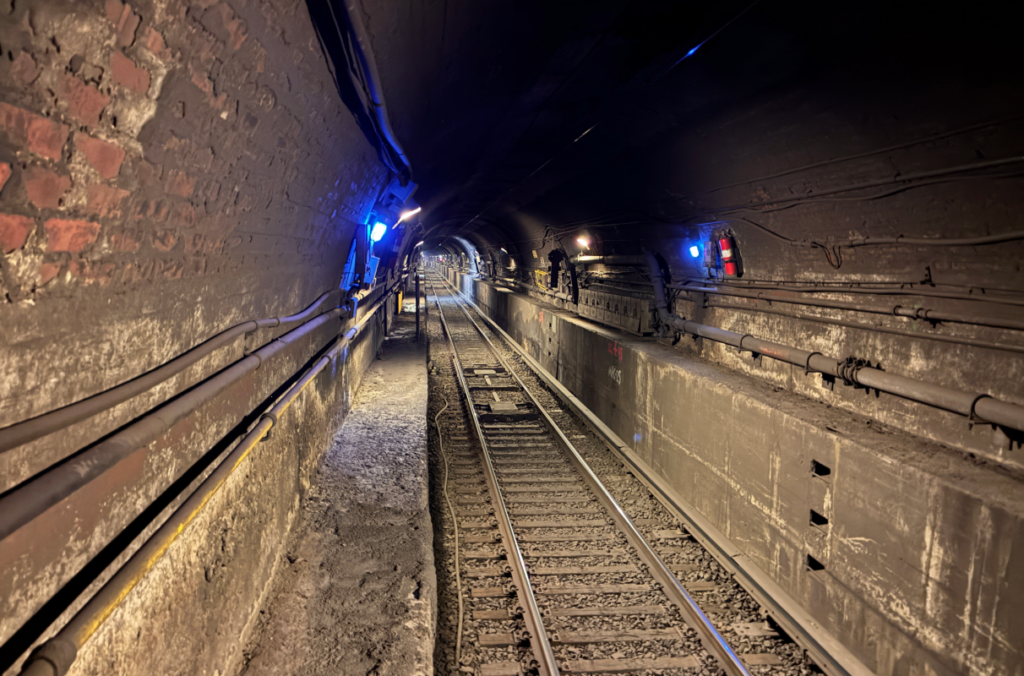
As part of Amtrak’s East River Tunnel Rehabilitation Program, teams are fully reconstructing damaged tunnel systems – from track and power to signals, communications and fire-life-safety infrastructure – one tube at a time during phased shutdowns, allowing rail service to continue through the remaining tunnels for Amtrak, LIRR and NJ TRANSIT riders. That work recently reached a key milestone with the reopening of Line 2, the first tube returned to service following full structural and systems rehabilitation.
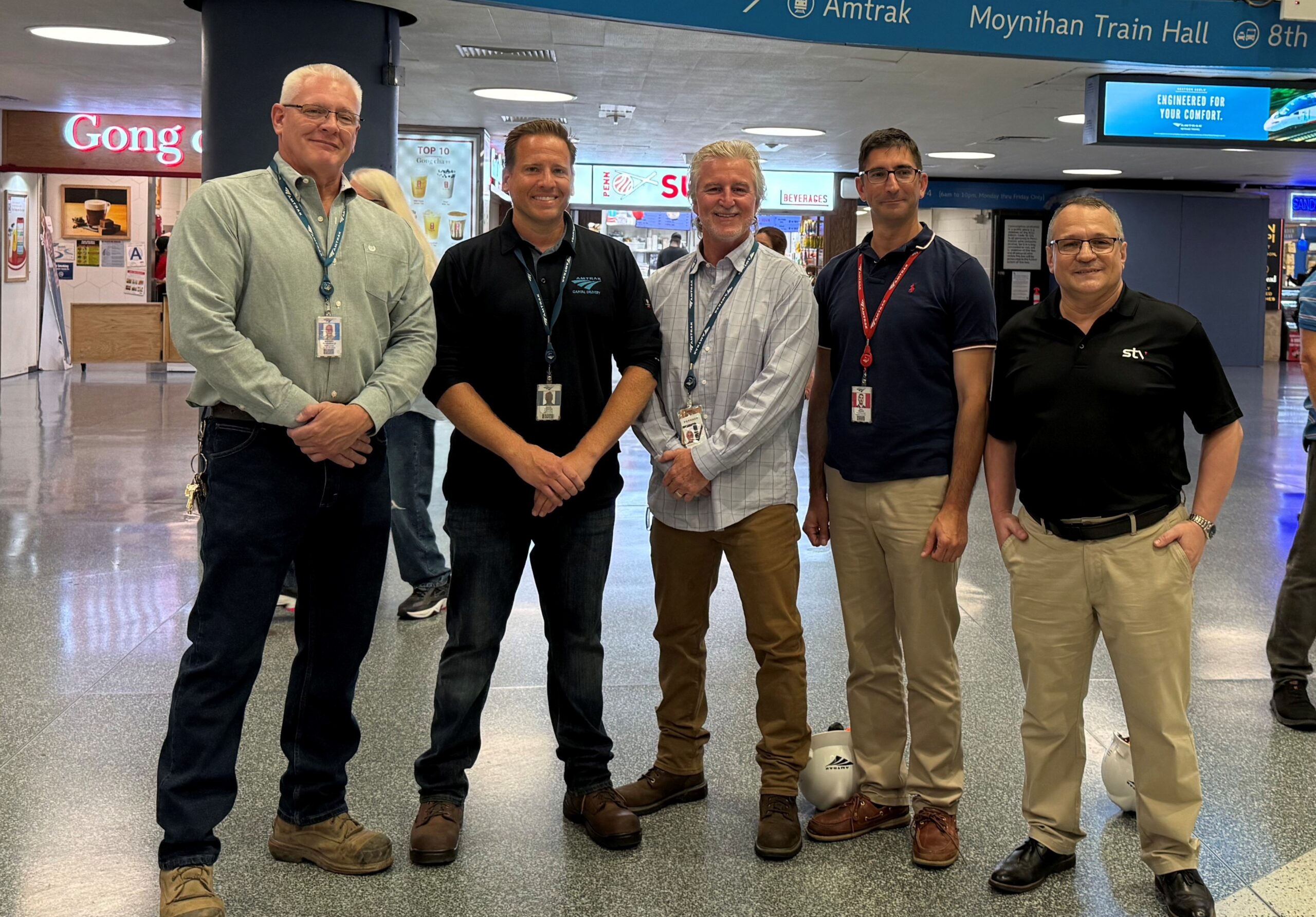
We sat down with two STV leaders supporting the project as part of the program’s construction management team who, in joint venture with Artheon (formerly Naik Group), are helping to structure delivery sequencing, controls and risk-informed decision-making: Vinny Kissoon, senior vice president and national practice leader for project controls and Liviu Chivu, vice president and senior program manager. In this roundtable, Kissoon and Chivu talk about what it takes to rebuild critical rail infrastructure beneath an active city and what other owners and delivery teams can learn from the experience.
When you’re rehabilitating a century-old tunnel, what’s the first thing you need to understand once work gets underway?
Liviu Chivu: You start with the drawings and the history, but very quickly you’re validating assumptions against real conditions. In a tunnel that’s been in service for more than a century – and affected by events like Superstorm Sandy – what you uncover can differ from what you expect. From a construction management standpoint, it’s also about understanding how systems interact. Track, power, signals, communications – they’re all tied together in a confined space. Early on, the focus is on structuring the work so systems can be installed, tested and integrated in a way that avoids downstream conflicts.
Vinny Kissoon: In the field, it comes down to access and constructability. You’re working underground with tight clearances. How crews move materials, equipment and personnel safely through the tunnel ultimately defines how the work can be executed day to day.
What’s a common misconception about “rehabilitation” versus full reconstruction?
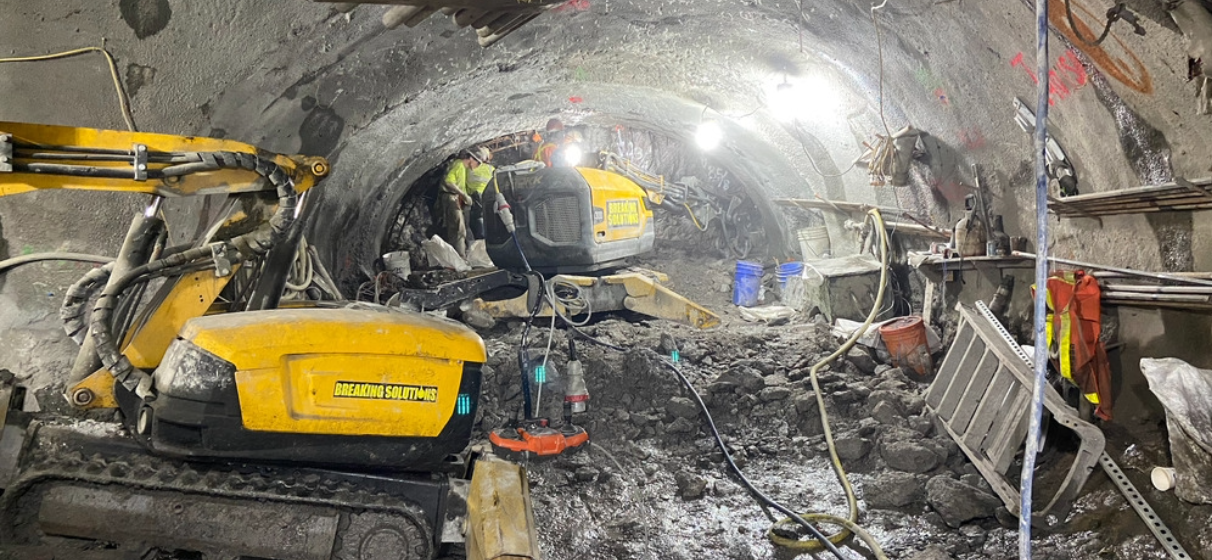
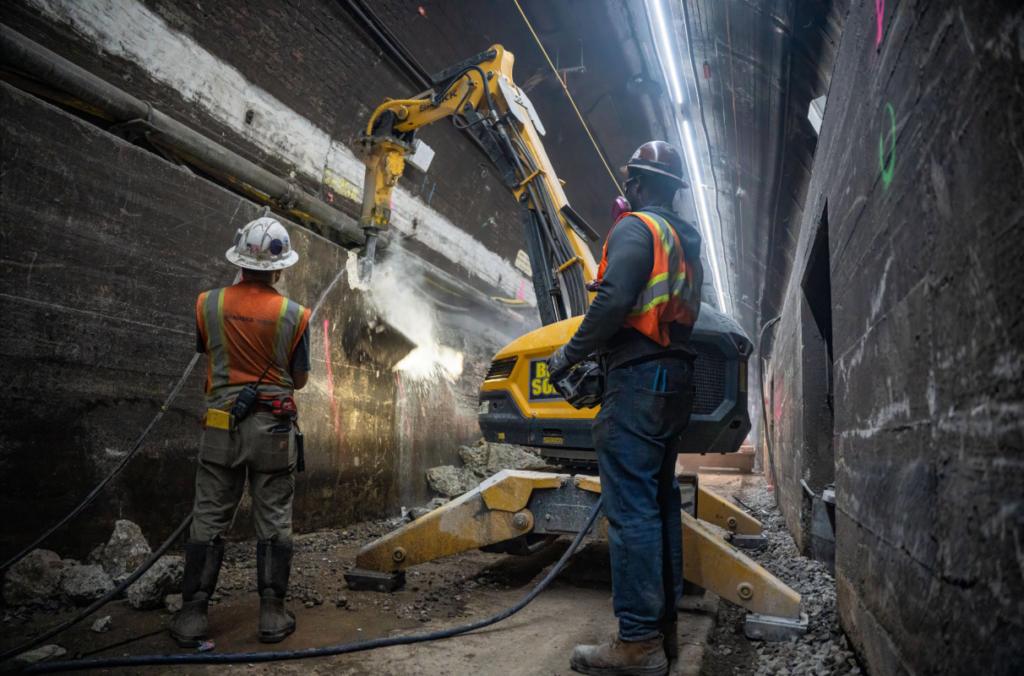
Liviu Chivu: People often think rehabilitation means patching or partial fixes. In this case, it’s a full reset. Systems are being demolished down to the tunnel liner and rebuilt to modern standards. That level of work is closer to new construction than traditional rehab, just in a much more constrained environment. And because the railroad needs to keep running, you’re effectively building a new tunnel inside an existing one – while other tubes remain in service – which adds a layer of complexity you don’t see on greenfield projects.
How do teams plan work when trains must continue to operate nearby?
Vinny Kissoon: In an active corridor environment, coordination becomes the governing constraint. The work is phased, section by section through access locations, with each shutdown creating a controlled construction environment inside the active corridor. In the field, that means planning access, materials movement and shift handoffs with a high degree of predictability so crews can work efficiently and safely within the isolated zone, while staying fully aware of adjacent railroad operations.
Liviu Chivu: From a management perspective, the key was creating a defined shutdown environment where work could proceed independently of live rail operations. For this project, Amtrak utilized an innovative Railroad Isolated Construction Zone (RICZ), creating a dedicated construction environment. That approach improved access, working hours and shift scheduling inside the zone, and strengthened safety through electrical isolation and physical separation from active infrastructure. It also supported clearer emergency response planning and lowered operational risk through well-defined boundaries and contingency planning.
What role does safety play in decision‑making on a project like this?
Vinny Kissoon: Safety is the lens through which every decision is evaluated. Whether we’re reviewing a work plan, approving a sequence change or staffing a shift, the question is always: does this protect workers and rail users? In the field, that means repeatable processes and accountability. Everyone needs to understand not just what they’re doing, but why. That consistency keeps crews safe, especially when multiple trades are working in close quarters.
Track and systems installation are major milestones in tunnel work. Why are these phases so critical?
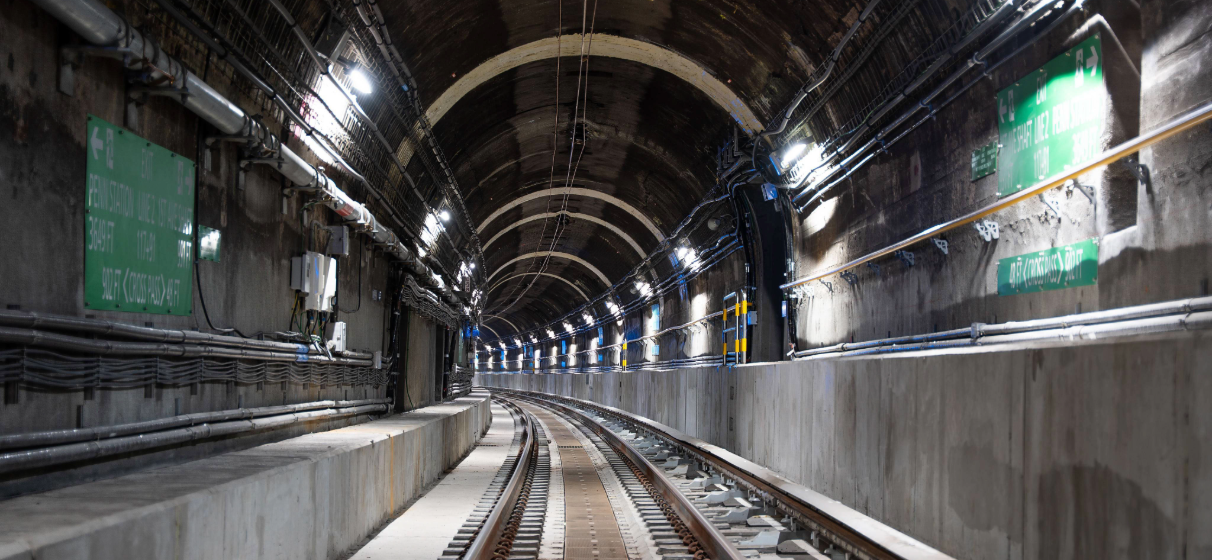
Liviu Chivu: Installing track and systems is where all the earlier work comes together. Geometry, tolerances, interfaces – if something is off, it affects everything that follows. These phases require close coordination between designers, inspectors and contractors to ensure the finished product performs as intended. The recent reopening of Line 2 underscores that point: reaching that milestone required new benchwalls, power, communications and fire-life-safety systems and track installation to come together in a way that supports safe, reliable operations.
Vinny Kissoon: From the field side, it’s about precision. You’re installing permanent infrastructure that needs to function reliably for decades. That level of accuracy takes planning, experienced crews and constant verification.
How do you maintain quality across multiple shifts and a large team?
Liviu Chivu: Maintaining quality starts with clear expectations, strong documentation and disciplined coordination across every shift. Consistency enables teams to manage risk while maintaining progress against broader delivery goals. It also requires leadership visibility – being present, identifying issues early and making sure lessons learned in one phase inform the next.
What lessons from this project are most relevant for owners planning similar work?
Liviu Chivu: Owners should invest in planning and governance up front. Complex infrastructure projects succeed when there’s a clear framework for decision‑making, risk management and collaboration. At the same time, they need to respect the complexity of systems integration – modern rail tunnels are as much about technology as they are about concrete and steel.
Vinny Kissoon: And owners should never underestimate the importance of field execution and project controls. Underground work leaves little room for error, so maintaining schedule, tracking progress and adapting safely when conditions change are just as important as the technical solution itself. Experienced teams make that possible.
Looking ahead, what does success look like for a project of this scale?
Vinny Kissoon: Success is delivering infrastructure that performs safely and reliably from day one – and continues to do so for decades – while maintaining public confidence throughout construction. On a project of this scale, every phase has to contribute to long-term performance, not just short-term completion.
As the East River Tunnel Rehabilitation Program advances, its lessons extend well beyond a single corridor. For owners facing aging infrastructure, the work reflects a broader shift already underway across the industry: renewal is increasingly taking place within active systems, not alongside them. Delivering in these environments requires more than technical expertise – it requires disciplined program frameworks, integrated decision-making and teams experienced in managing risk while maintaining operations. As infrastructure investment accelerates along corridors like the Northeast Corridor, that delivery model is becoming the standard – and programs like this demonstrate how it can be executed safely, reliably and with long-term performance in mind.