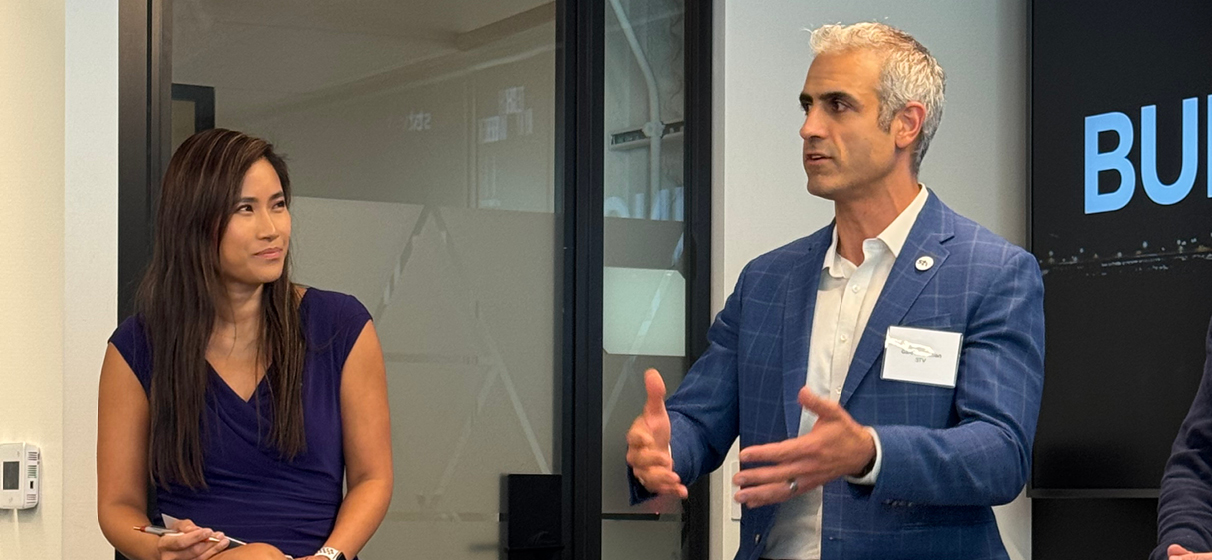
I had the privilege of attending the inaugural launch of the Richards Transportation Initiative at Penn (R-TRIP), a dynamic new hub that brought together leading scholars, students, public agencies and private partners to tackle today’s most complex mobility challenges. The day was an energizing blend of panels, student showcases and conversations with transportation and infrastructure leaders across disciplines, all focused on a shared mission: translating research into actionable, real-world solutions.
I’ve seen firsthand how bridging academic insight to the practical realities of infrastructure delivery is exactly the kind of partnership the industry needs more of. As I listened to market sector leaders speak candidly about their needs and frustrations, one message was clear: many organizations feel they aren’t receiving the innovation and strategic guidance they need from infrastructure firms.
Are We Listening Closely Enough to Our Clients?
For decades, our industry has rightly emphasized risk management. Yet in doing so, we may have inadvertently created a different kind of risk: a risk of inertia. Too often, firms are structured around minimizing exposure rather than maximizing impact. The result is a growing disconnect between what clients are ready for and what firms can deliver.
Departments of transportation, transit agencies and airport authorities are telling us they want partners who push the envelope, not protect the baseline. They are increasingly open to innovation, alternative delivery and performance-based contracts. They are asking for creativity in how we help them meet their goals, beyond merely complying with the scope.
These same clients notice when engineers lead with volume instead of value: when firms tout hundreds of available staff instead of the handful of specialists who will actually make the difference.
A Time for Reinvention
As an industry, it’s time to ask hard questions about how our internal governance, incentives and delivery models shape behavior. Are we rewarding efficiency over insight? Predictability over partnership? And within the constraints of our current procurement systems (where contracting rules and risk frameworks often set the tone), are we still doing enough to challenge our clients and expand what’s possible? We may not control the procurement environment we work within, but we can influence it by bringing forward ideas that responsibly test its limits.
At STV, as a founding R-TRIP member and sponsor, we believe that leadership requires challenging those assumptions. That’s why our Advisory Services line was designed differently. We’re strategists, economists, digital specialists and policy thinkers who understand that the path to infrastructure excellence begins with a bold idea, grounded in data and translated into execution.
Moving from Minimizing Risk to Optimizing It
The conversations at the University of Pennsylvania reinforced what many of us already know: our clients are ready for us to be bolder. Clients want partners who go beyond a proposal response and can help shape what the right scope should be in the first place. True partnership means stepping into the ambiguity our clients face and working alongside them to find solutions that may not fit neatly within existing service lines or industry structures.
That often requires us to take on a different kind of risk: the risk of innovation. That means investing our time, ideas and resources in new approaches. It’s time we reframe risk as something that might not immediately succeed but can ultimately move our industry forward.
Firms that succeed in the next decade will be those willing to challenge norms, reframe incentives, and design new ways to reach our shared goal: infrastructure that meets the needs of today’s communities and those of future generations.