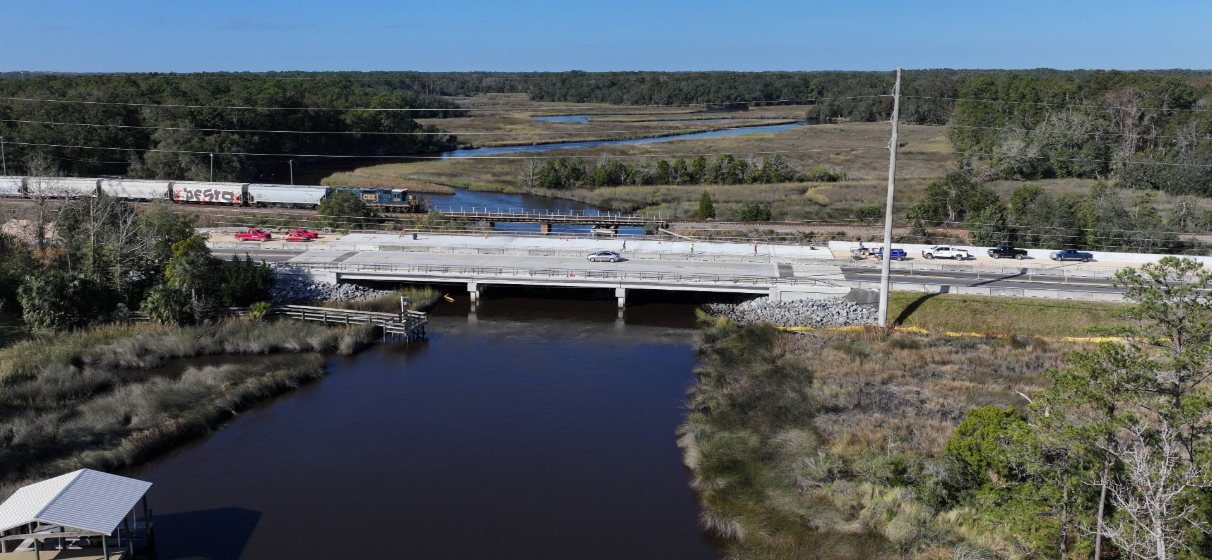
When the Florida Department of Transportation (FDOT) needed to replace the structurally deficient eastbound Simpson Bridge along U.S. 90 in Florida’s western Panhandle, the challenge extended far beyond the bridge itself.
Salt marshes, Gulf sturgeon habitat, a protected state park, private property and local businesses surrounded the corridor, leaving little flexibility for conventional approaches to project delivery. At the same time, the route serves as an important transportation link for residents, visitors and commercial traffic traveling through the region.
FDOT District 3 needed a solution that could maintain mobility, minimize impacts to surrounding environmental and community resources and support the travel route’s long-term transportation needs.
“On a site with so many competing requirements, bridge design, environmental planning and construction strategy cannot be treated as separate exercises,” said Keith Jackson, PE, senior vice president and Florida district manager at STV. “Success depends on understanding how every decision affects the broader transportation network.”
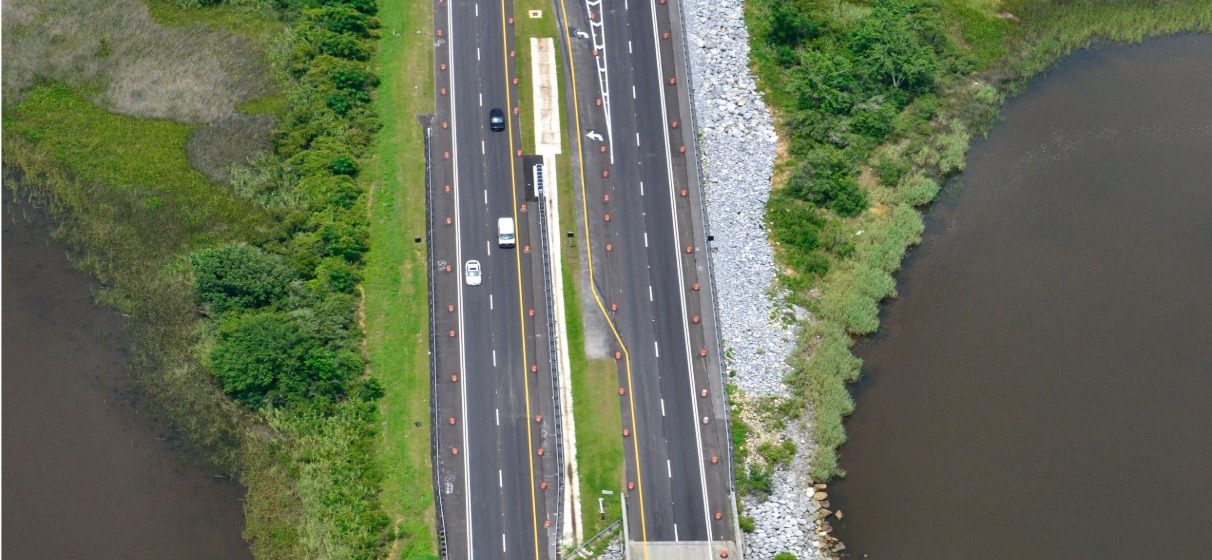
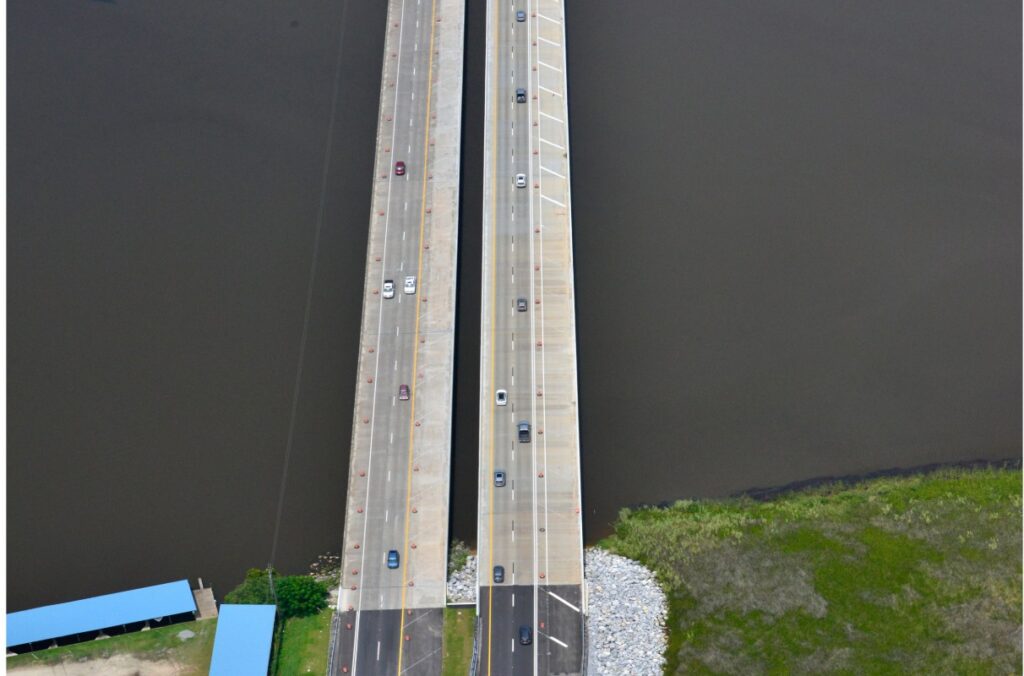
Working with FDOT, STV helped develop a solution that paired the construction of a new eastbound bridge with the widening of the existing westbound structure – removing a longstanding bottleneck while positioning the corridor for a planned six-lane configuration.
Turning Constraints Into the Strategy
The project site offered little room for error.
Environmental resources, recreational destinations and developed properties surrounded the crossing, requiring the project team to carefully evaluate how improvements could be delivered while minimizing impacts beyond the existing transportation corridor.
Rather than focusing solely on replacing a deficient bridge, FDOT and STV examined the broader transportation, environmental and community context. Traffic operations, long-term plans, permitting considerations and constructability were evaluated together during project development.
This integrated planning process helped identify a phased approach that allowed the project to advance while reducing risks, maintaining mobility and limiting impacts to surrounding resources.
The project’s success ultimately depended less on selecting a bridge configuration than on identifying the most effective way to deliver the improvement. By considering engineering, environmental stewardship and implementation strategies together, the team developed a solution that supported multiple project objectives simultaneously.
“We looked at the program as a whole rather than treating the bridge replacement as a standalone exercise,” Jackson said. “By evaluating traffic operations, environmental considerations and long-term transportation needs together, we helped FDOT identify an approach that delivered immediate improvements while creating value for future investments.”
The planning effort also helped avoid impacts to nearby community destinations, including the Simpson River Fishing Pier and Jim’s Fish Camp, while preserving access along the route throughout construction.
Building for Today’s Need and Tomorrow’s Corridor
As project development progressed, another opportunity emerged.
A separate planning effort was evaluating U.S. 90 as a future six-lane corridor. Rather than replacing only the deficient eastbound bridge, FDOT and STV explored how the project could contribute to those longer-term transportation goals.
The resulting strategy incorporated widening of the existing westbound bridge as part of the overall improvement program, creating additional capacity that supports both current operations and future expansion.
By coordinating the bridge replacement with the region’s long-term improvement plans, the project delivered infrastructure that serves both current and future transportation needs. The approach helped avoid redundant investments and reduced the likelihood of future construction impacts, permitting efforts and associated project costs.
“One of the biggest benefits for the owner was the ability to align today’s project with tomorrow’s transportation needs,” Jackson said. “That coordination helped maximize the value of the investment, reduce future disruption and position the corridor for planned improvements without requiring another major bridge modification.”
The effort required close coordination among engineering, environmental and transportation planning teams. Planned roadway improvements, habitat considerations and right-of-way impacts all needed to remain aligned with the project’s environmental commitments and long-term vision.
Delivering Within a Sensitive Environment
The Simpson River crossing sits within designated Gulf sturgeon critical habitat and borders an extensive estuarine system.
Environmental stewardship remained a central consideration throughout project development and delivery. By carefully evaluating alternatives and limiting disturbance outside the existing transportation footprint, the project team worked to protect sensitive habitat while advancing critical infrastructure improvements.
Project development included hydraulic modeling to evaluate storm surge, scour and coastal conditions, helping determine bridge geometry and shoreline-protection measures. During final design, the discovery of juvenile Gulf sturgeon habitat introduced additional restrictions that prohibited certain high-decibel in-water construction activities during winter months.
Despite those requirements, the project maintained its environmental commitments throughout construction. Permanent wetland impacts were limited to just 0.066 acres, and no impacts to Gulf sturgeon habitat were recorded. The project also avoided impacts to adjacent protected recreational resources.
The outcome demonstrated how thoughtful planning early in project development can help transportation agencies balance infrastructure investment with environmental responsibility in highly sensitive locations.
Adapting During Construction
Like many complex infrastructure projects, the Simpson Bridge replacement required flexibility once construction began.
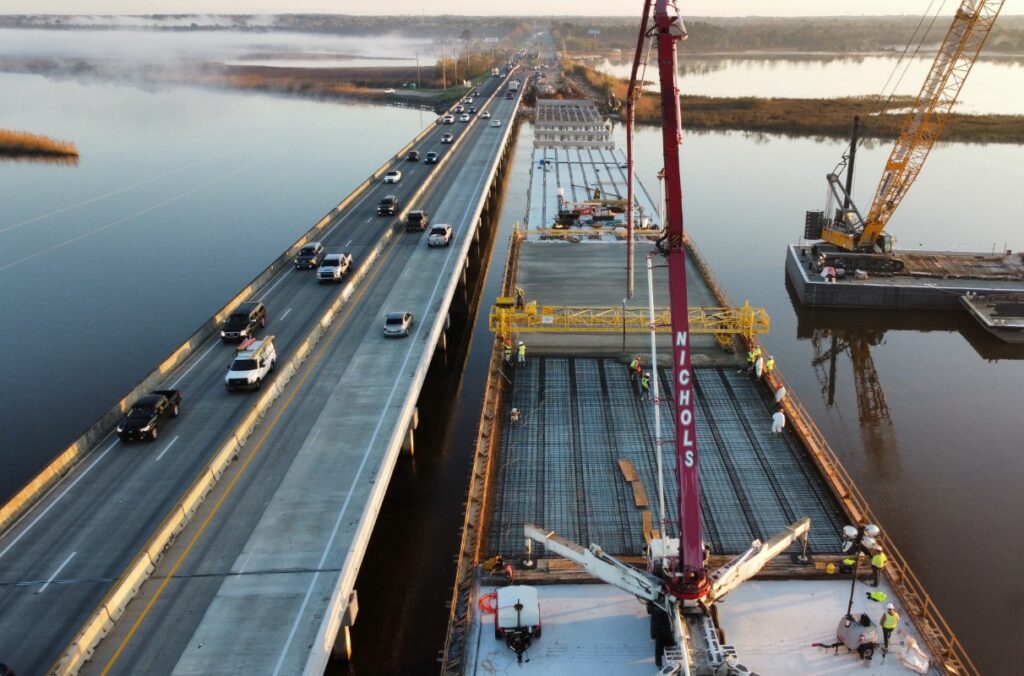
Unexpected conditions affecting the eastbound bridge required traffic to be shifted earlier than planned onto the widened westbound structure. The project team implemented a three-lane traffic configuration that maintained mobility while allowing construction activities to continue safely.
FDOT, design teams, construction personnel and inspection staff worked closely together to respond to evolving field conditions while maintaining commitments related to safety, mobility and environmental stewardship.
Those adjustments reinforced the value of the project’s integrated planning approach. Because transportation operations, environmental considerations and implementation strategies had been evaluated together from the outset, the team was able to respond to changing conditions without compromising core project objectives.
Even with those challenges, the project was completed 42 days ahead of the contractual schedule.
A Model for Future Infrastructure Programs
Today, the completed crossing provides modern travel lanes, full shoulders, upgraded barriers and improved accommodations for motorists and cyclists traveling along this important regional route.
But the project’s lasting value extends beyond the completed bridge.
The Simpson Bridge replacement demonstrates how transportation agencies can achieve better outcomes when planning, engineering and delivery decisions are integrated early in project development. By using a single project to address immediate infrastructure needs while advancing broader corridor goals, FDOT was able to preserve mobility, minimize environmental impacts and maximize the value of its investment.
For transportation owners facing similarly constrained project environments, the key lesson is that some of the most significant project benefits are realized long before construction begins. Early coordination among technical disciplines can reveal opportunities to reduce risk, streamline delivery and create infrastructure that remains effective well into the future.
“For owners facing complex infrastructure challenges, the greatest opportunities often come from integrating planning, engineering and delivery decisions early in project development,” Jackson said. “When those disciplines work together from the outset, projects can achieve better outcomes for mobility, environmental stewardship and long-term value.”