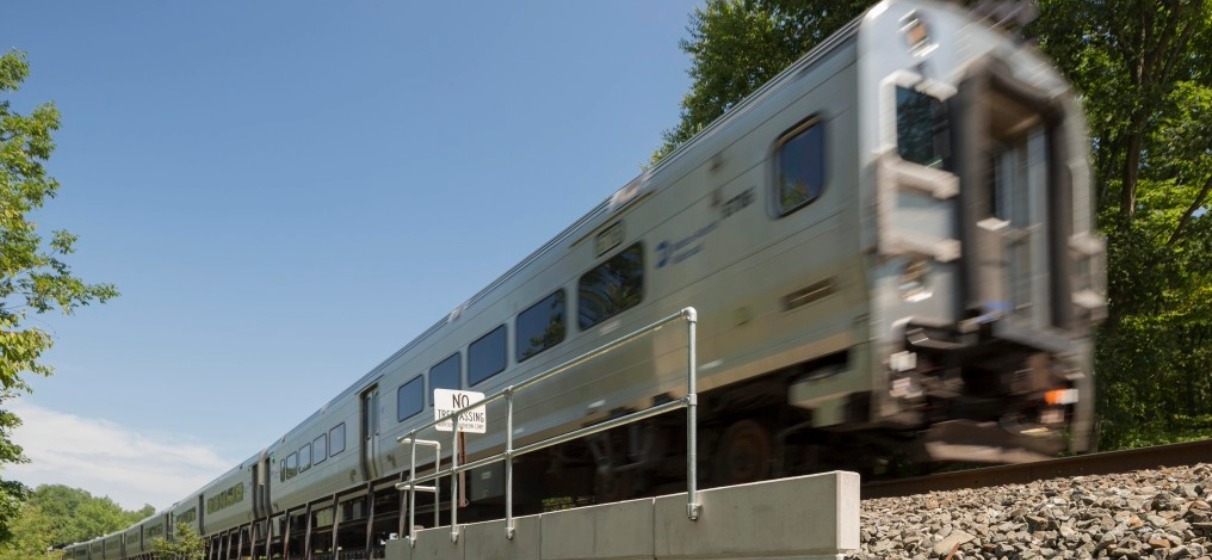
STV today announced that it has been selected, in joint venture with WSP, by the Metropolitan Transportation Authority (MTA) to lead design and preliminary engineering for a major climate resilience program along Metro-North Railroad’s Hudson Line. This project supports a broader $800 million effort to protect one of the Northeast’s most heavily traveled rail corridors from flooding, extreme rainfall and other climate-related threats. Serving approximately 10 million riders annually, the 75-mile corridor is a critical transportation link between New York City and the Hudson Valley.
Stretching from New York City to Poughkeepsie, the Hudson Line faces growing risks from coastal flooding, extreme rainfall, mudslides and washouts. The New York City Panel on Climate Change projects sea levels could rise by 23” the 2050s and 45” in the 2080s, putting low-lying segments of the line at risk of tidal flooding.
The joint venture will advance preliminary engineering for a near-term design-build package focused on the corridor’s most vulnerable segments, including portions of the line between Spuyten Duyvil and Hastings-on-Hudson. The team will also develop a corridor-wide resilience framework to help guide future investments across the entire Hudson Line. To support delivery, the team will deploy advanced field assessment technologies including mobile LiDAR, ground-penetrating radar and AI-enabled subsurface mapping tools.
“Rail corridors built generations ago are confronting climate conditions they were never designed to withstand,” said Breanna Horne, CHMM, ENV SP, vice president and national resilience lead at STV. “This program will help the MTA identify risks before they become disruptions, prioritize investments and strengthen one of the region’s most important transportation corridors for decades to come.”
STV supports resilience, planning, engineering and program delivery initiatives for some of New York’s most complex transportation systems, including the Gateway Program’s Hudson River Tunnel; New York City Transit flood mitigation and resilience programs; and Metro-North Railroad infrastructure modernization projects. STV’s broader resilience portfolio also includes award-winning climate adaptation and infrastructure hardening efforts at the Coney Island Rail Yard Complex, where the firm provided multidisciplinary services to help protect one of the largest rail facilities in the MTA network from future storm and flood impacts.