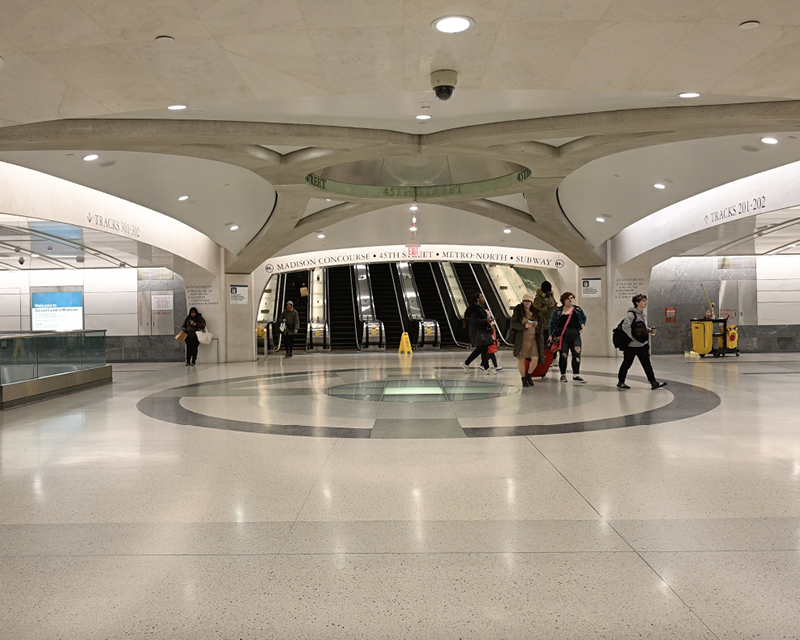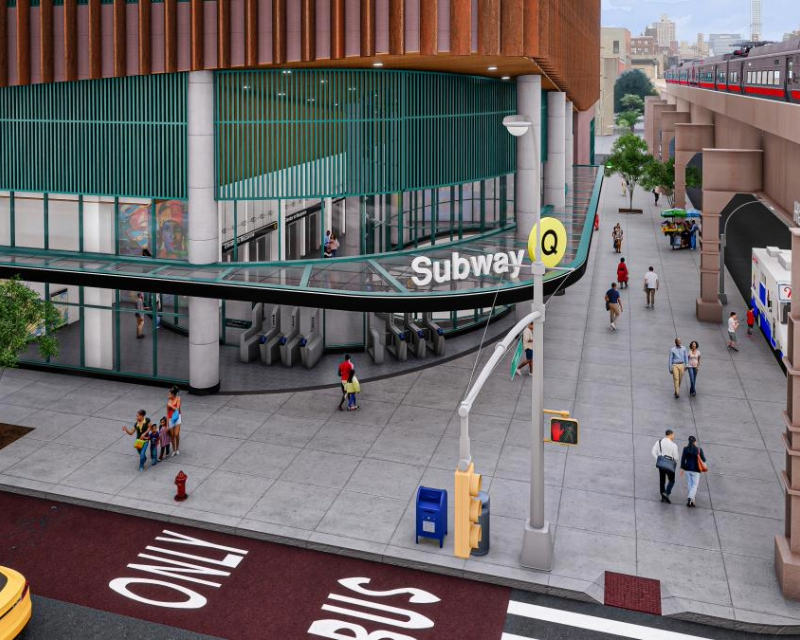

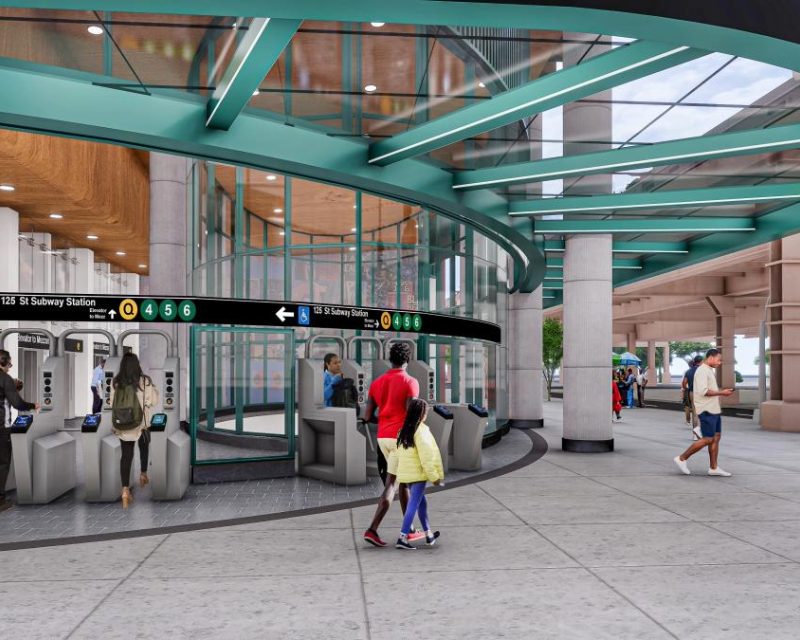

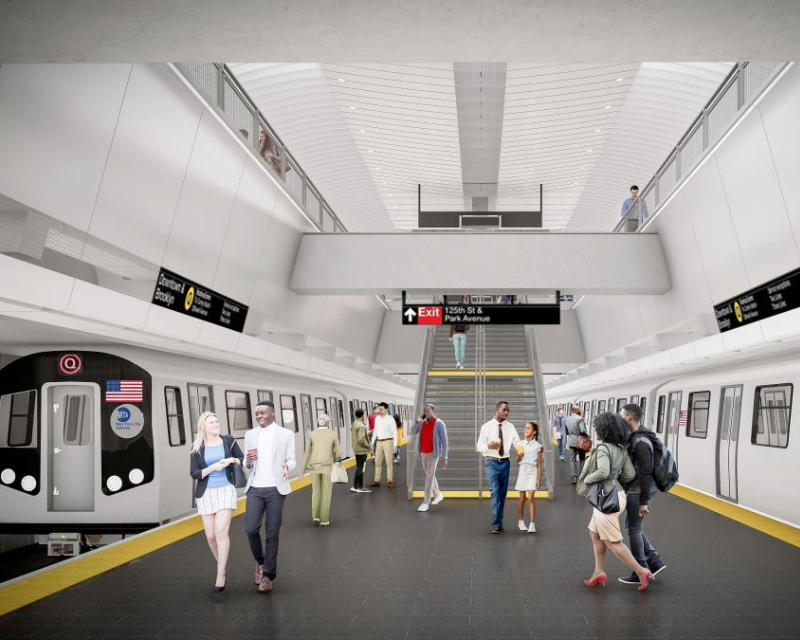
The first phase of the Second Avenue Subway marked a milestone in New York’s transportation history – opening the Upper East Side’s long-awaited 96th Street extension after nearly a century of planning. Building on that success, Phase II will extend the line another 1.6 miles north to 125th Street and Park Avenue. Under the direction of the Metropolitan Transportation Authority’s Capital Construction Company, this phase adds three new stations at 106th, 116th, and 125th Streets, connecting to both the Lexington Avenue Line and Metro-North Railroad to improve access across Upper Manhattan and the Bronx.
What challenges did STV address?
Extending a major subway corridor through dense urban neighborhoods requires balancing engineering, community and logistical challenges. The project must navigate complex underground conditions, maintain service reliability for surrounding infrastructure and coordinate with utilities and property owners. The design also aims to minimize surface disruption along 125th Street, reduce environmental impacts and integrate seamlessly with existing transit lines – all while advancing the MTA’s long-term accessibility goals.
What solutions did STV deliver?
In joint venture with WSP/Parsons Brinckerhoff, STV is providing full multidisciplinary design services, including planning, architecture, civil and structural engineering, mechanical, plumbing, and fire protection, as well as traction power, communications and systems integration. The team’s extended preliminary design introduced strategies to limit open-cut construction, address critical utility relocations early and reduce construction risk. This comprehensive approach supports a more efficient and coordinated delivery for one of the nation’s most ambitious transit expansions.
How will Phase II improve mobility and communities in Upper Manhattan?
The project will bring reliable, high-capacity subway service to East Harlem and surrounding neighborhoods – communities that have long lacked direct access to the city’s subway network. By extending Q train service northward, Phase II will shorten commutes, ease congestion on the Lexington Avenue Line and strengthen regional connectivity. Beyond transportation benefits, the new stations will catalyze economic opportunity, provide ADA-accessible infrastructure and support equitable development throughout Upper Manhattan and the Bronx.
Key stats and accolades
- Extension length: 1.6 miles (96th Street to 125th Street)
- Three new stations at 106th, 116th, and 125th Streets
- Comprehensive planning, architecture, engineering, and systems design
- Advanced design reduced open-cut construction and minimized community impact