Airports are gateways to cities and regions, but behind the scenes, they operate as intricate ecosystems. Every detail—from passenger seating and concession layouts to back-of-house workstations—must be orchestrated to keep travelers moving and create a welcoming environment. That orchestration is where Furniture, Fixtures and Equipment (FF&E) comes in. Often overshadowed by the scale of new terminals or airfield upgrades, FF&E is the finishing layer that directly shapes how passengers experience a modern airport.
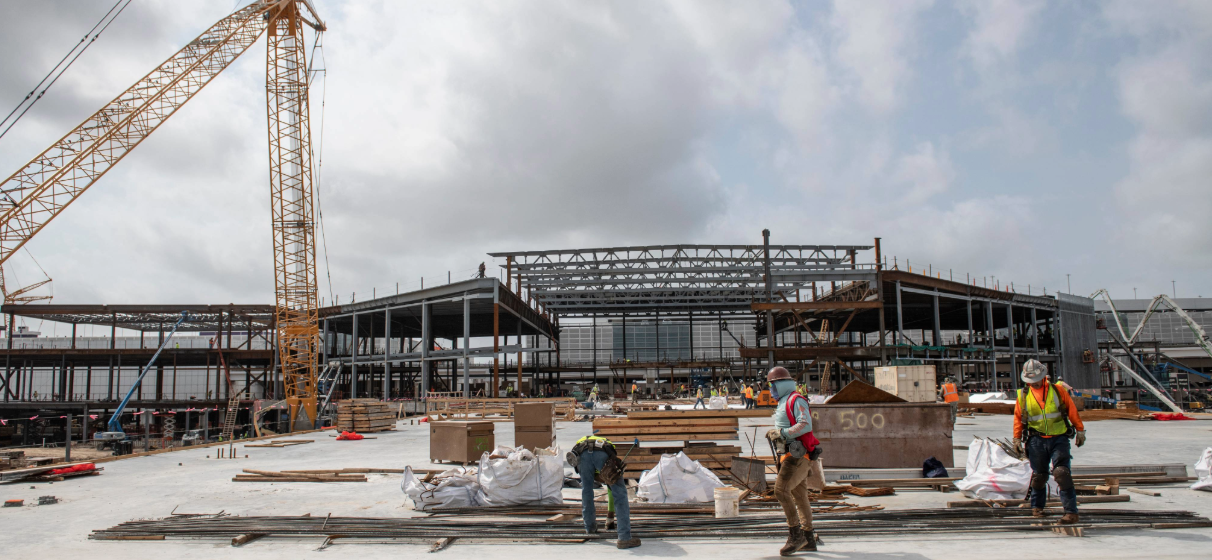
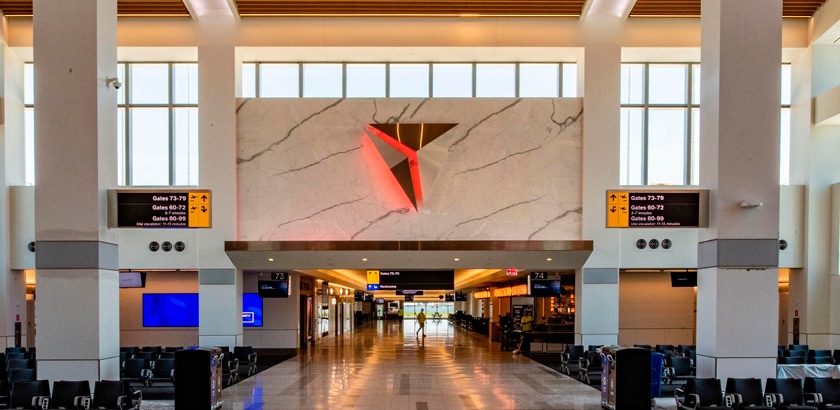
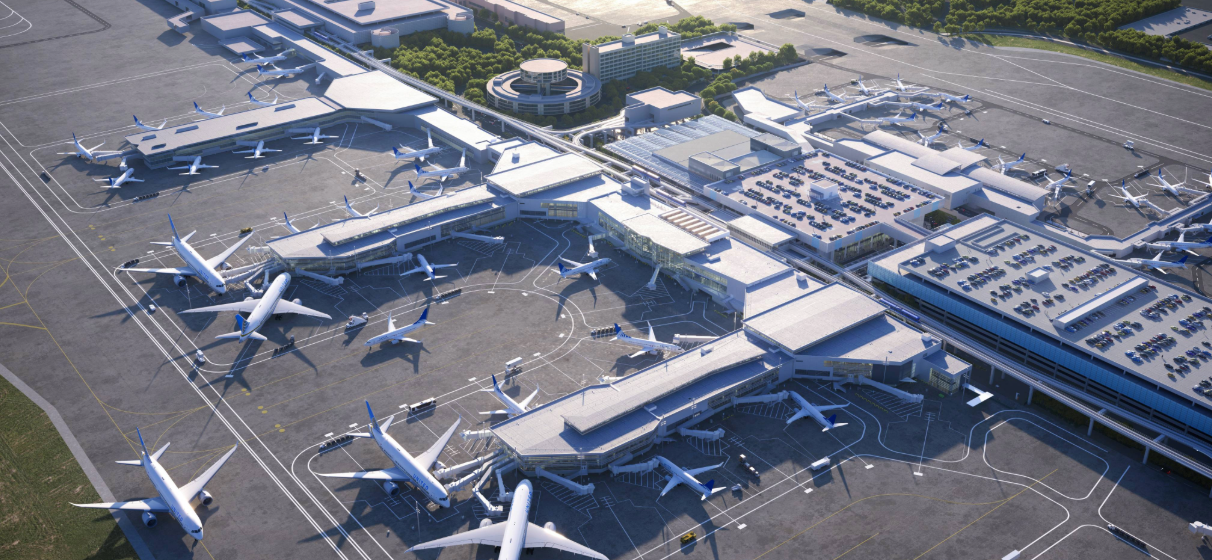
For example, at George Bush Intercontinental Airport (IAH) Terminal B, where STV’s program management and construction management (PM/CM) team is helping deliver a $2.55 billion redevelopment program that is modernizing the last vestiges of the original 1969 terminal, FF&E is one of the program’s final yet most impactful phases. Every item needs to be carefully planned, sourced and installed to meet the demands of one of the nation’s busiest airports.
We spoke with Dina Tsiolis, project executive, and Neeti Thakkar, project manager, about their leadership on this transformative program, their broader aviation work across the central Midwest and how FF&E shapes the passenger experience in aviation.
What is FF&E in airports, and how does it relate to the design and construction process of modern terminals?
Dina Tsiolis: FF&E includes all the movable items that aren’t part of the building’s structure but are essential to its function. People interact with these pieces daily – chairs in departure lounges, check-in counters, security screening equipment and even trash receptacles.
While FF&E is installed in the later stages of a project, planning begins early. It is the final layer between construction and operations, and if not properly managed, it can delay an airport’s opening.
What makes airport FF&E unique compared with other building types like offices or healthcare spaces?
Dina Tsiolis: Airports serve millions of passengers annually, so FF&E must be highly durable and designed for constant use. Unlike offices, airports never close. That means every item, from seating to counters, must be easy to maintain, clean and repair with minimal downtime.
Airport FF&E also plays a crucial role in accessibility and branding. Features like Americans with Disabilities Act (ADA) compliant seating, wayfinding signage, family areas and integrated power outlets demonstrate a commitment to inclusivity and convenience. Airports often serve as city gateways, and FF&E contributes to that identity, sometimes using local finishes and custom designs.
Neeti Thakkar: There are also unique regulatory considerations. Airport FF&E must comply with the Transportation Security Administration (TSA), Federal Aviation Administration (FAA) and international safety standards. Installations undergo rigorous operational testing and are scheduled with Operational Readiness and Airport Transfer (ORAT), which verifies that furniture and equipment are tested, staff are trained, and the facility is fully operational on day one.

How does an airport FF&E team coordinate with architects, contractors and operations staff to deliver a seamless passenger experience?
We act as the bridge between design intent and day-to-day functionality, beginning coordination early and carrying it through final installation. Upfront, we align FF&E with the architectural vision, reviewing floor plans, adjacencies, and power/data needs to ensure furniture supports workflow, passenger flow and aesthetics.
We collaborate with mechanical, electrical and plumbing (MEP) engineers and low-voltage (IT and security) consultants to confirm compatibility with infrastructure, while working with contractors to plan phasing, staging and installation sequencing. At IAH Terminal B, for example, we partnered with design teams, construction managers at risk (CMaRs), and United Airlines’ Chicago Real Estate (CRE) FF&E Standards Team to align design specifications, budget and schedule. We also coordinated manufacturer sample reviews, developed detailed RFPs, and created FF&E schedules to support accuracy and compliance.
Finally, we engage operations teams, TSA, IT, and maintenance to validate long-term functionality. During turnover, we integrate FF&E into ORAT planning and manage punch lists, warranties and documentation. This holistic approach ensures that FF&E is not an afterthought, directly supporting passenger flow, safety, and experience.
What are the latest trends in airport FF&E today?
Dina Tsiolis: Coordinating airport FF&E means connecting design, construction, and operations:
- Design alignment: Ensuring FF&E matches architectural vision, workflow and passenger experience goals.
- Infrastructure compatibility: Working with MEP engineers to address power, HVAC, and structural needs.
- Construction integration: Planning delivery, sequencing, and installation to meet safety and milestone requirements.
- Operations readiness: At IAH Terminal B, we created detailed FF&E schedules, aligned budgets, and worked with TSA, IT and maintenance teams.
By integrating FF&E with ORAT planning, we deliver smooth handoffs to operations while improving passenger flow, safety and long-term maintainability.
What advice do you have for building a career in airport FF&E, especially in aviation?
Dina Tsiolis: FF&E goes beyond selecting furniture. It encompasses understanding specifications, procurement, delivery, installation and long-term maintenance. My advice is to experience each state firsthand: spend time on job sites, observe installations, ask about lead times and logistics, and see how FF&E connects to overall design and operations. Stay curious, keep organized and always consider the “why” behind the process. Ultimately, FF&E is about creating safe, durable, welcoming and future-ready environments.
Neeti Thakkar: This is my first aviation FF&E project, which has been eye-opening. I’ve learned how complex and integrated this work is – supporting passenger movement, security and operations while reinforcing a brand identity. The level of coordination across disciplines and attention to detail required has given me a new appreciation for how thoughtfully planned FF&E can enhance both function and experience.
STV’s work at the IAH Terminal B reflects the firm’s leadership in managing the complexities of aviation modernization, from early planning to final delivery. By integrating FF&E seamlessly into the design and construction process, our teams help clients create resilient, efficient and traveler-focused airports.
To learn more about STV’s aviation expertise and PM/CM services, visit STV’s Aviation Market page or explore our featured projects.