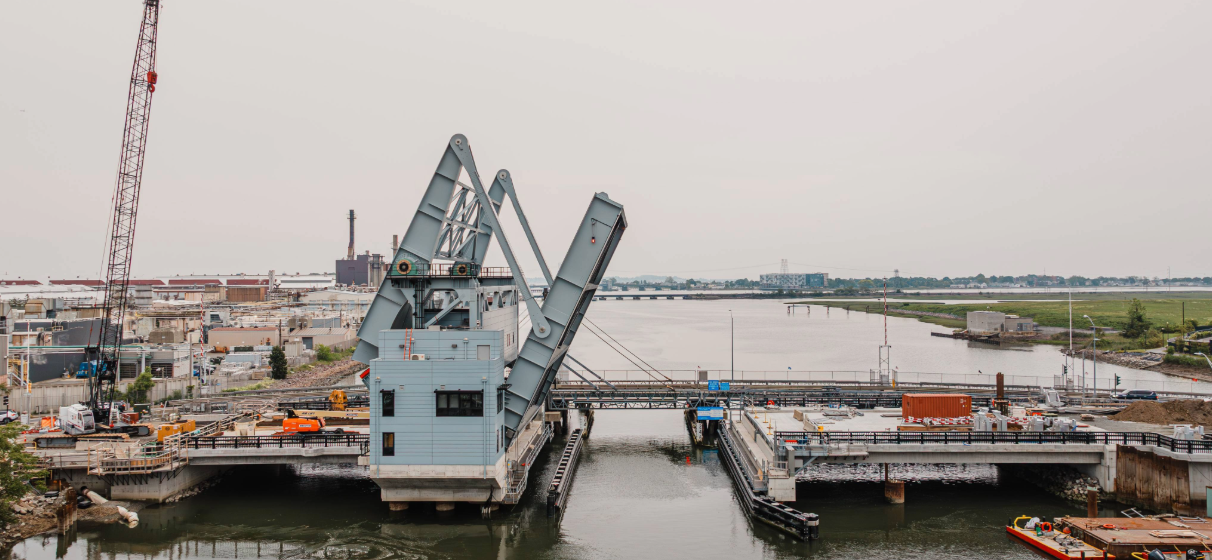
As an engineer, few things excite me more than the challenge of designing structures that not only fulfill their intended purposes but also address a multitude of real-world constraints. One such challenge was the design of the bridge over San Rafael Creek, part of the Sonoma-Marin Area Rail Transit (SMART) Larkspur extension project. During a recent presentation at the International Bridge Conference, I discussed how this endeavor marked a fusion of creativity, collaboration and technical innovation that embodies how design and construction teams can work together to fully unlock the potential of rail transit infrastructure.
Why SMART Needed the Larkspur Extension
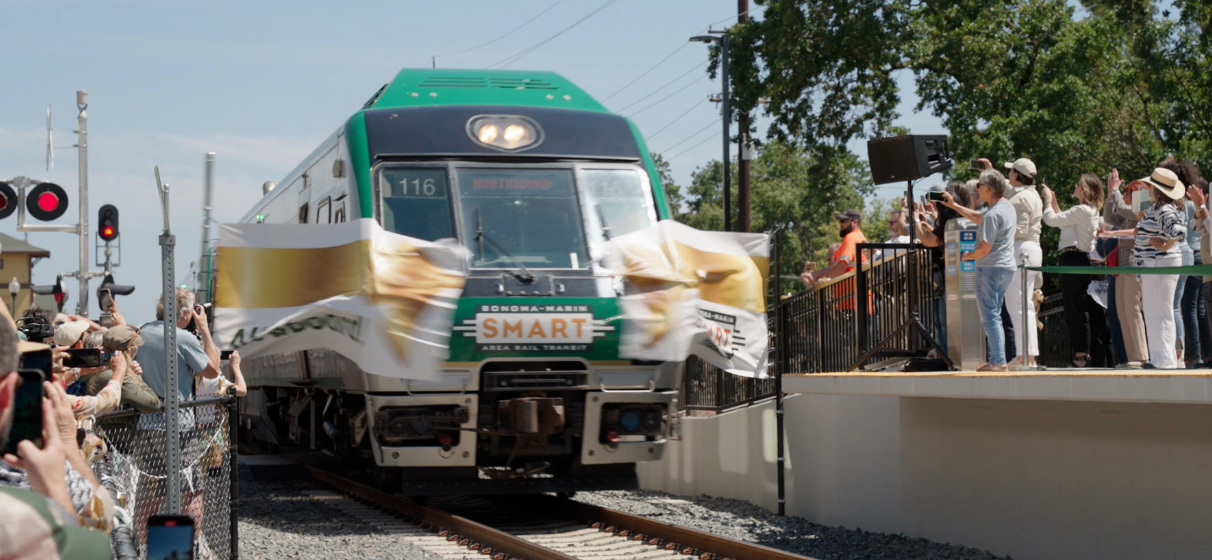
The SMART system began operations in 2017 to connect Santa Rosa with San Rafael, California. For years, STV has been a long-standing partner with SMART, first serving as the lead engineer in the design-build of this initial operating segment, then serving in the same role for the Larkspur Extension, and most recently supporting the newly opened Windsor Extension.
SMART’s plan for the Larkspur Extension allowed passengers to connect directly with ferry services and onward transportation options into San Francisco. However, the road to innovation included various challenges – specifically in addressing how the system would cross San Rafael Creek.
Complex Constraints at San Rafael Creek
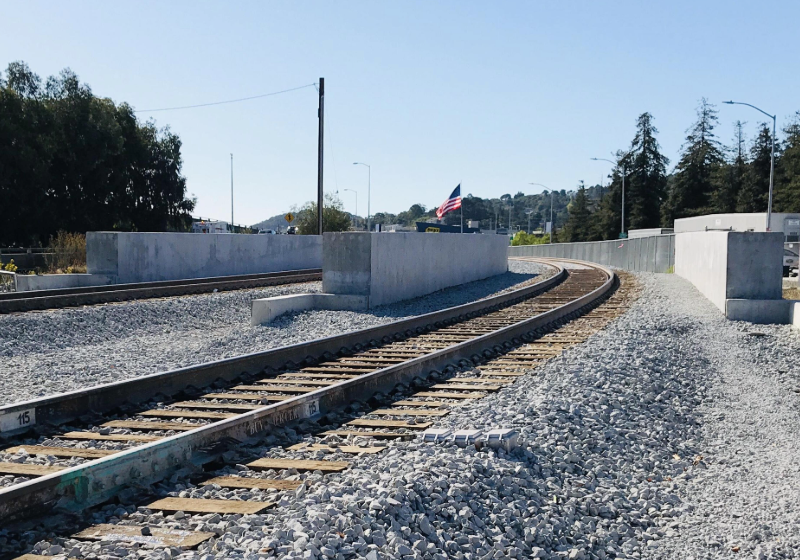
The site for the new bridge presented considerable constraints. The existing crossing was an outdated single-track timber trestle, riddled with the complications of limited alignment flexibility due to its proximity to the San Rafael train station and adjacent roadways. Adding to the complexity was that the construction timeline was tightly constrained and environmental regulations prohibited any temporary works in the creek.
Initially, the concept was to utilize curved steel through plate girders, but this approach was quickly deemed infeasible due to the site’s corrosive nature and SMART’s preference for concrete bridges. As a result, our team shifted focus towards a more viable solution: a precast concrete trough section that would maintain structural integrity while satisfying environmental constraints.
Precast Innovation Transforms the Bridge
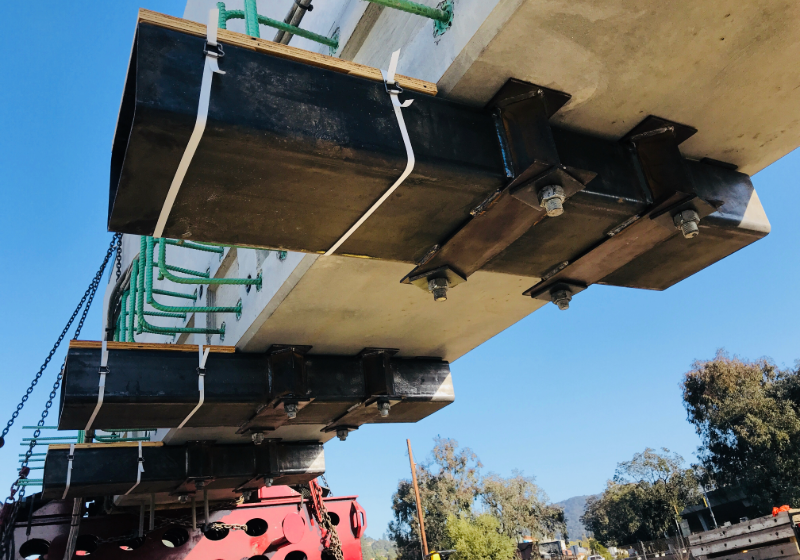
The decision to pursue a precast trough solution marked a turning point in the project’s design philosophy. During the design phase, our collaborative team aimed to create a structure that was not only functional but also durable and sustainable.
We initiated the design with precast girders supporting transverse double-tee floor beams. However, as discussions with SMART progressed, we recognized the need for a more robust structure that would require minimal long-term maintenance. This led us to modify the design with traditional precast prestressed box girders and subsequently replace double-tee floor beams with precast-prestressed rectangular voided slab beams. The improvement in structural integrity and environmental sensitivity became evident through this iterative process.
Designing a Structure to Last
A crucial feature of our final design was the incorporation of transverse post-tensioning connecting all elements of the bridge. This approach helped create a rigid, cohesive section while also minimizing structural depth – an essential consideration owing to the site’s high water levels. The use of longitudinal post-tensioning further enabled effective shear transfer between the floor beams.
To meet the rigorous SMART Design Criteria Manual standards, our design also accounted for heavy maintenance train loads and the specific needs of SMART’s diesel multiple unit cars. This combination of foresight and flexibility allowed us to optimize the layout, bringing the abutments closer to the creek than initially planned without compromising the structural integrity or safety of the bridge.
Lessons in Collaboration and Sustainable Engineering
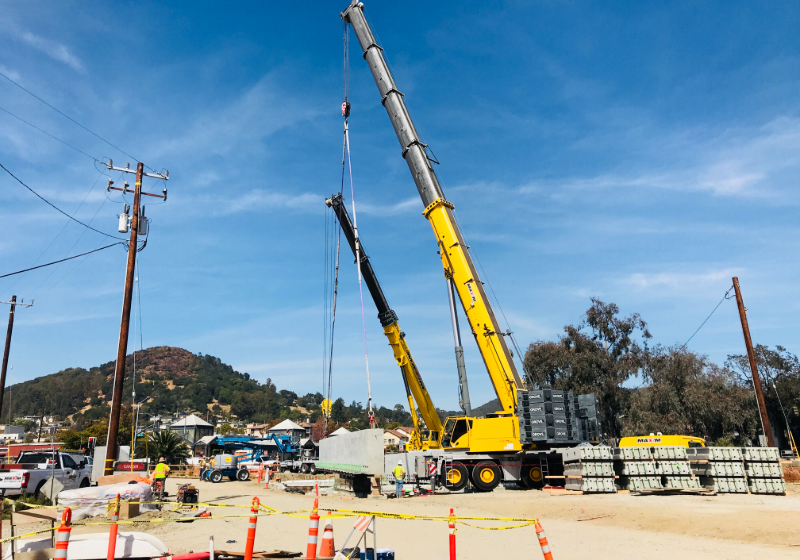
Reflecting on the San Rafael Creek bridge design, it becomes clear that out-of-the-box thinking, and collaboration are paramount in engineering projects. Each stakeholder – from engineers and contractors to client involvement – played an integral role in problem-solving. Our approach didn’t just adhere to existing codes and guidelines; we pushed boundaries by integrating modern materials and construction methods while respecting the local environment.
This bridge becomes more than just a transit feature; it symbolizes our commitment to sustainable and innovative engineering solutions in the face of challenges. It also opens the door for future projects aiming for similar advancements in rail transit. As we embrace technological advancements in design and construction, we can create infrastructure that stands the test of time and serves generations.