With major events such as the 2026 FIFA World Cup underway, as well as the U.S. semiquincentennial and the LA28 Olympic and Paralympic Games on the horizon, cities are preparing for moments when years of demand on access, mobility and operations can be compressed into a matter of days.
According to Business Insider, more than five million people are expected to use U.S. airports during the World Cup this summer, while Reuters reports that roughly one in three global travelers may be headed to the United States for the tournament. That level of concentrated demand places unprecedented pressure on airport access, circulation and regional transportation networks – all within a fixed timeframe.
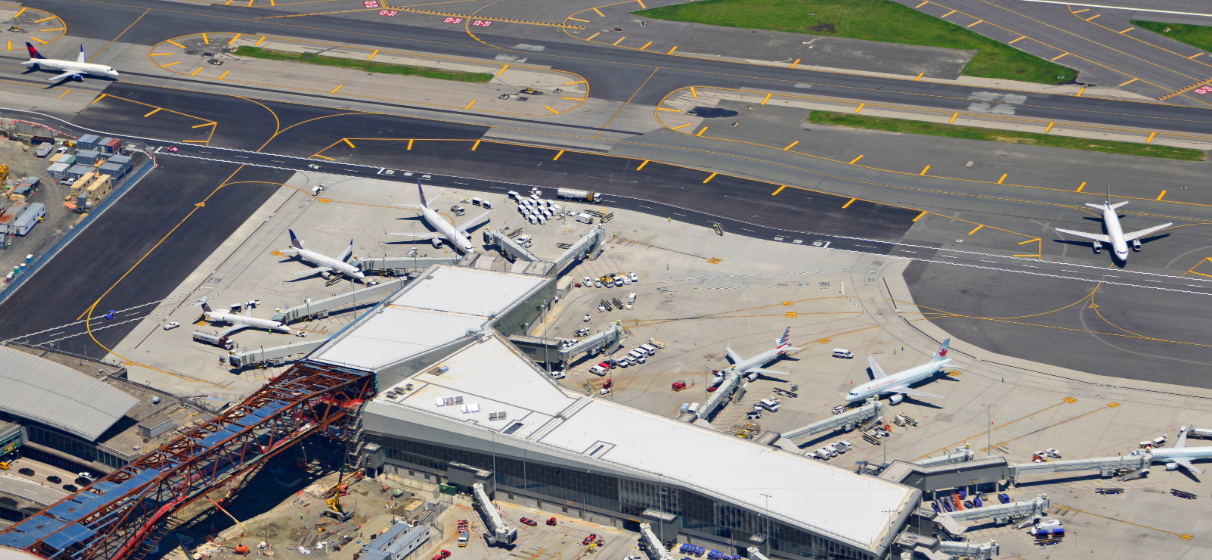
For many travelers, the first and last 30 minutes of the airport journey shape their entire impression of a region. In recent years, STV has supported airport owners and operators on several projects that reflect those demands from different angles, including multimodal access improvements at Los Angeles International Airport (LAX), the LAX Landside Access Modernization Program, Dallas-Fort Worth (DFW) International Airport’s landside planning and program management and phased terminal redevelopment at John F. Kennedy (JFK) International Airport in New York.
In this Q&A, Henry Dumaran, vice president and aviation director for STV West region’s program management and construction management team, shares what airports must get right on access, operations and delivery when cities become global destinations – and how those investments can create long-term value well beyond a single event.
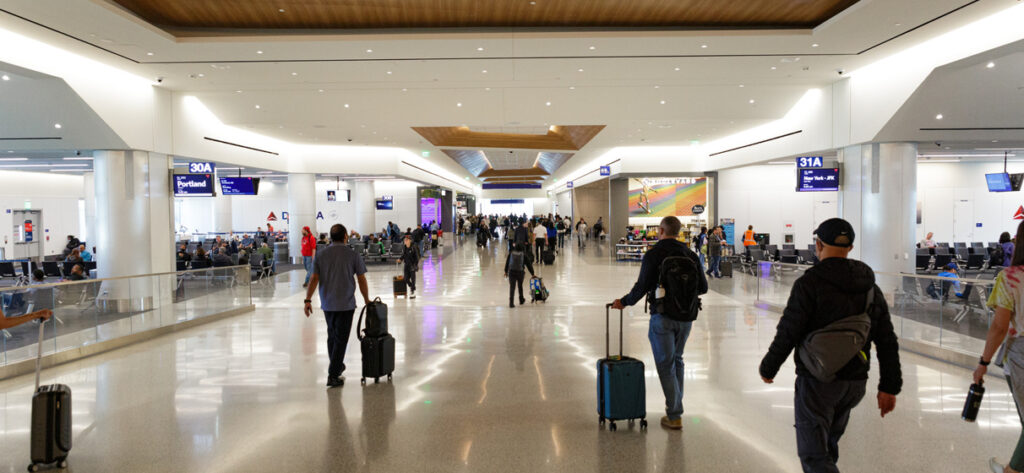
1. When a city is preparing for a major global event, what role does the airport play in shaping that first and last impression for visitors?
For most travelers, the airport experience begins well before the terminal – often in the first decision point between driving, transit or shared mobility – so performance at the curb and along access corridors becomes the first real test of the system.
During a major global event, all of that gets stress-tested as demand spikes, the timelines are fixed and the whole world is watching. What’s really being tested is whether the region can operate as an integrated system under pressure – when every part of the journey has to perform at the same time, often with limited room to adjust once demand peaks. In that kind of environment, the airport is doing more than moving passengers; it is demonstrating whether transportation, operations and public-facing infrastructure are well aligned to deliver confidence at scale for both visitors and communities that depend on those systems every day.
2. What do airport owners and operators sometimes underestimate about managing surge demand, particularly on the landside and access side of the passenger journey?
A lot of attention goes to what happens inside the terminal, but in many cases the first signs of strain show up outside it. You see it in roadway congestion, curbside backups, confusing circulation and weak connections between different modes of travel. All of that affects the passenger experience before someone ever gets to security.
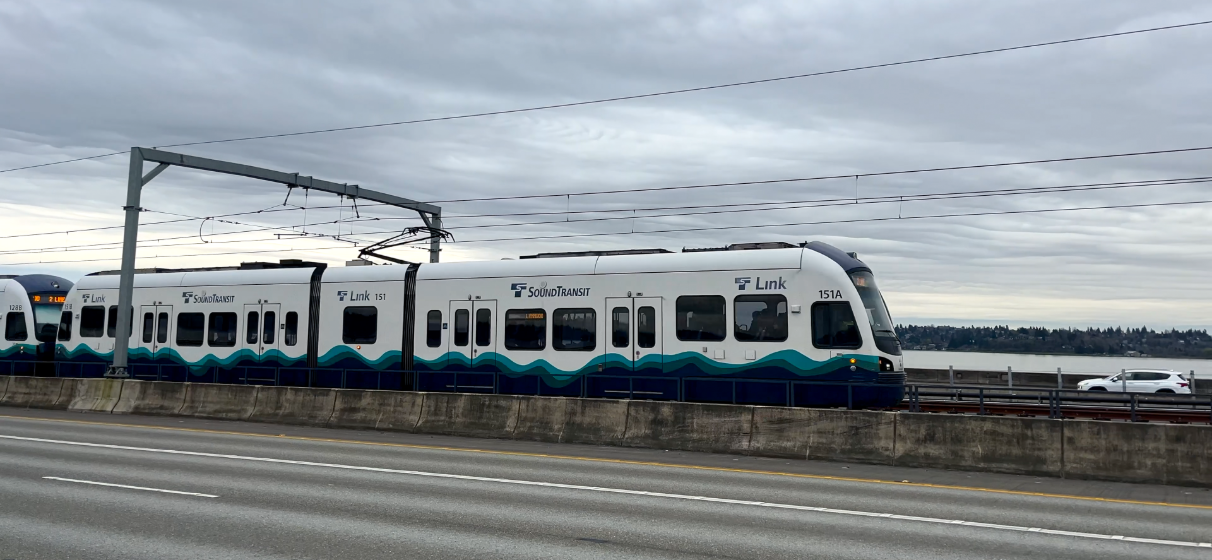
That is why landside access has to be looked at as part of the full journey, not as a separate issue. One of the biggest challenges is that demand is not only higher during major events, but it is also less predictable – especially as mode choice shifts dynamically between private vehicles, transportation network companies or TNCs, transit and parking. In a major event environment, success depends less on any one asset than on how well the airport, its partners and the broader transportation network are coordinated under pressure. That coordination is often complicated by competing stakeholder priorities, from airlines focused on throughput to operators managing curb access and local agencies responsible for regional mobility.
STV’s work at Los Angeles International Airport, including the LAX Landside Access Modernization Program, reflects that, and projects like DFW International Parkway show how access, circulation and multimodal planning can make a real difference when demand rises and expectations are high.
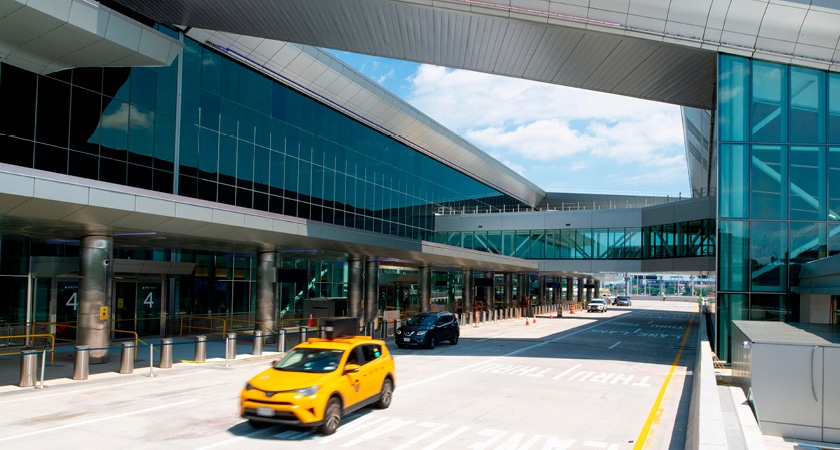
3. Why are roadway access, curbside circulation and multimodal connections just as critical as what happens inside the terminal?
Roadway access, curbside circulation and multimodal connections determine whether the passenger journey works before the terminal experience even begins. If those systems are congested, confusing or poorly coordinated, the strain is felt immediately, and it carries through the rest of the trip.
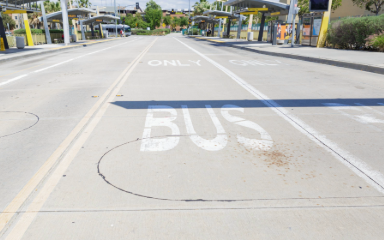
These systems are not secondary – they function as part of the airport’s operating environment, where small breakdowns in wayfinding, safety or circulation can quickly cascade into larger operational issues. Strong access planning, clear circulation, effective wayfinding and seamless connections between modes help reduce friction, improve safety and keep the entire system functioning at peak demand.
In practice, that means designing for how people actually move – balancing vehicle flow, pedestrian safety, ADA accessibility and clear decision-making points so passengers can navigate complex environments without hesitation. That becomes even more important during peak demand, when performance depends on how well the airport integrates with the broader regional transportation network.
4. What makes airport infrastructure projects especially challenging when improvements must be delivered in an active environment without disrupting day-to-day operations?
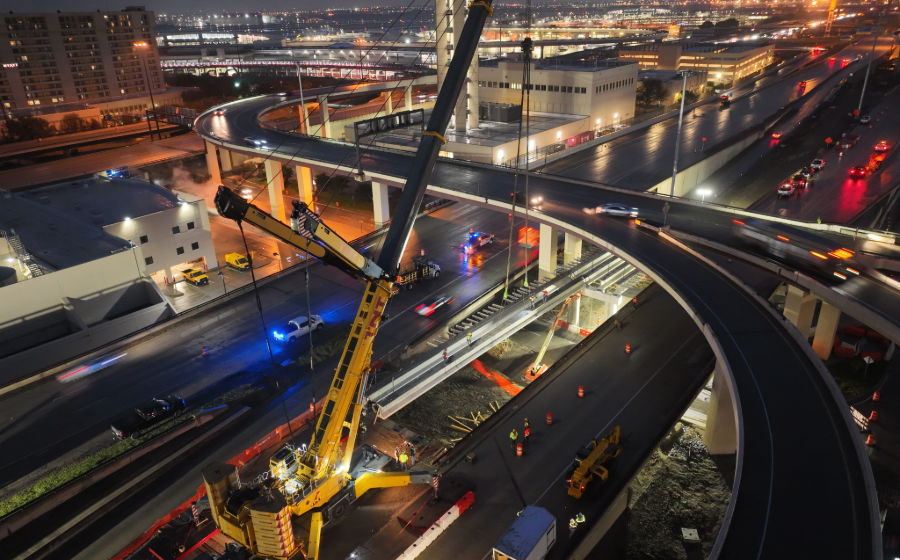
Airports have to maintain passenger flow, airline activity, safety, security and operational continuity while construction is underway, often under fixed milestones and highly visible deadlines. That makes phasing, stakeholder coordination and operational decision-making just as important as the design or construction itself.
In active airport environments, success depends on understanding how the airport functions as a live system – and sequencing improvements so today’s operations never break while tomorrow’s capacity is being built. That often requires detailed phasing strategies and ORAT-level planning, where even minor schedule changes or access constraints can affect airline operations, security screening or passenger flow.
STV’s work in the Los Angeles market, as well as on JFK’s redevelopment, shows just how complex it can be to keep operations moving while improvements are delivered.
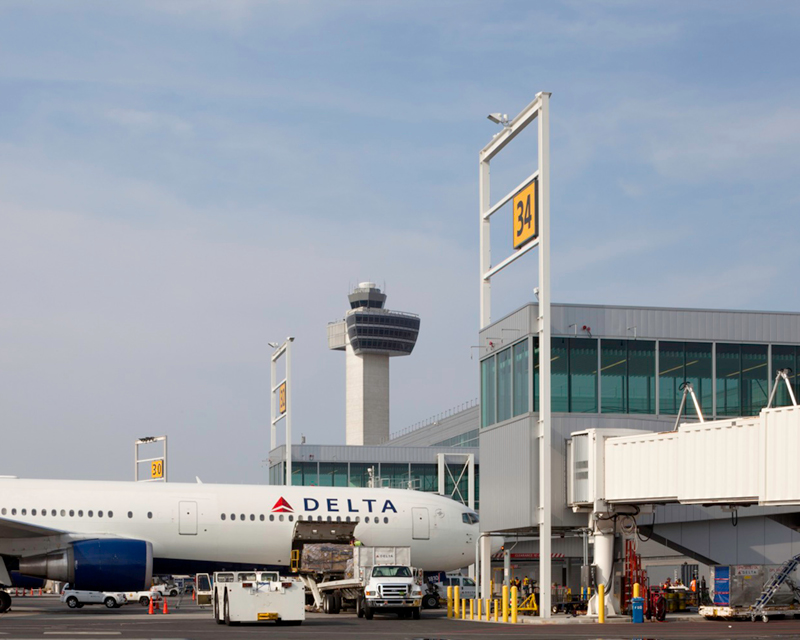
5. How can airport investments made to meet near-term demand also strengthen long-term resilience, mobility and the overall passenger experience?
The best investments solve today’s problem, but they also make the airport work better over the long term. That can mean improving circulation, strengthening access, simplifying the passenger journey or making operations more flexible and reliable as demand changes over time.
Projects at Los Angeles International Airport, including the LAX Landside Access Modernization Program, show how improvements made to support near-term demand can also strengthen long-term mobility, regional connectivity and the overall passenger experience. Work like DFW International Parkway reinforces that in another major airport setting.
The real challenge is deciding which investments create flexibility over time – whether that’s designing curb space that can adapt to future mode shifts or building systems that can scale without disrupting operations. If you approach it the right way, you are not just preparing for one high-profile moment; you are building a stronger operational foundation that supports long-term regional mobility, accessibility and a better experience for both travelers and the surrounding community.