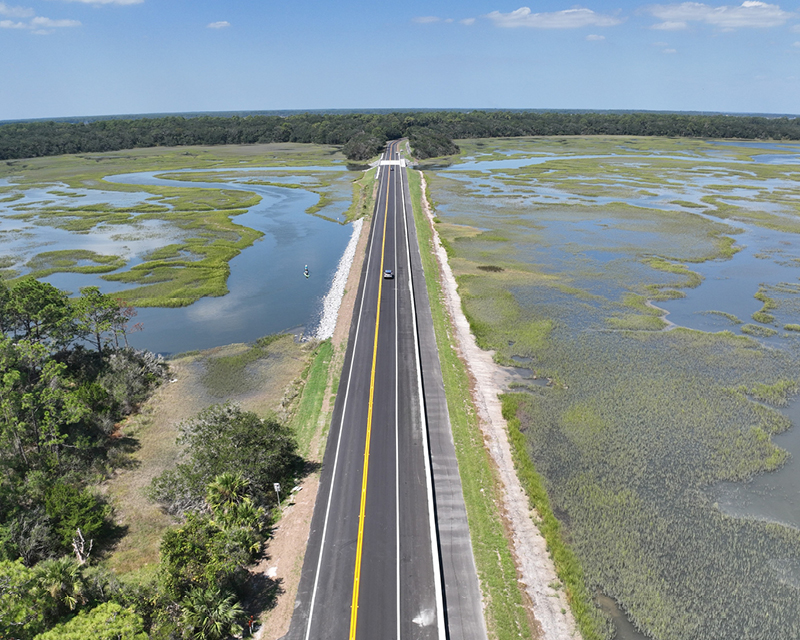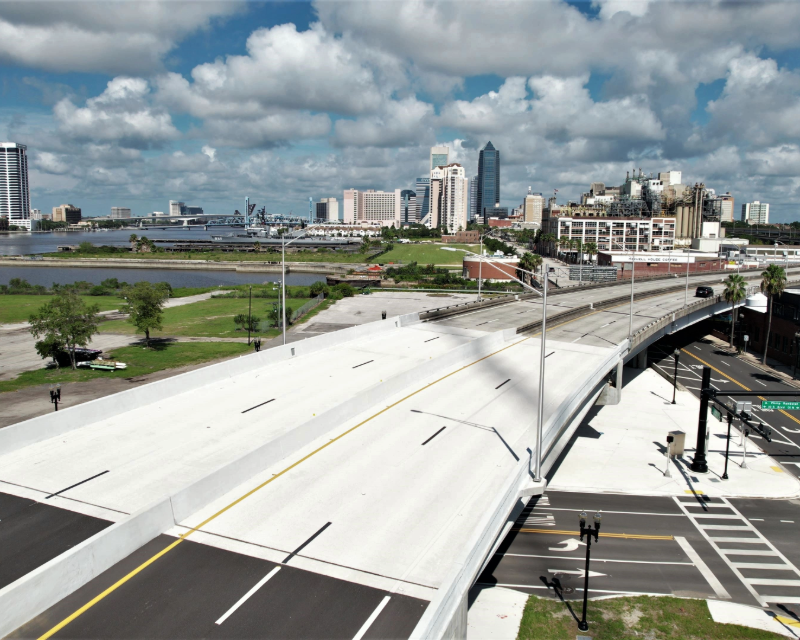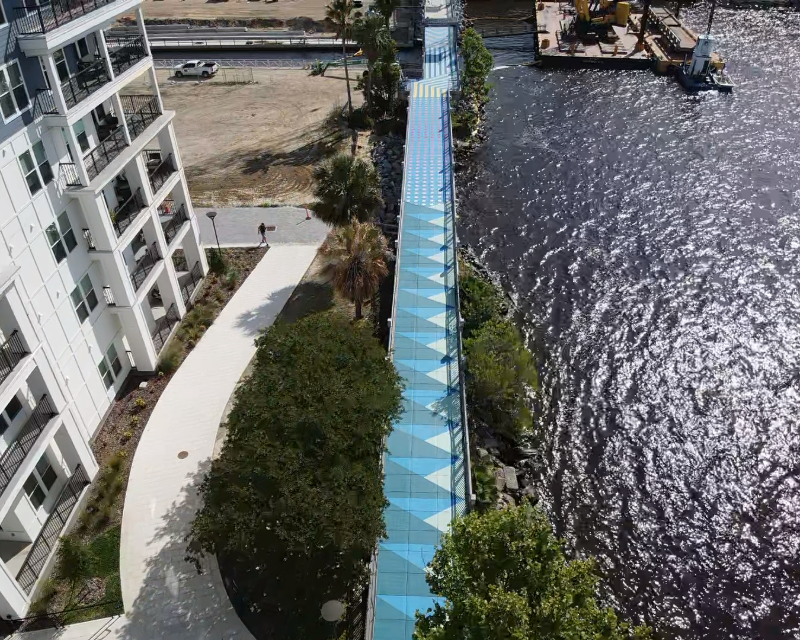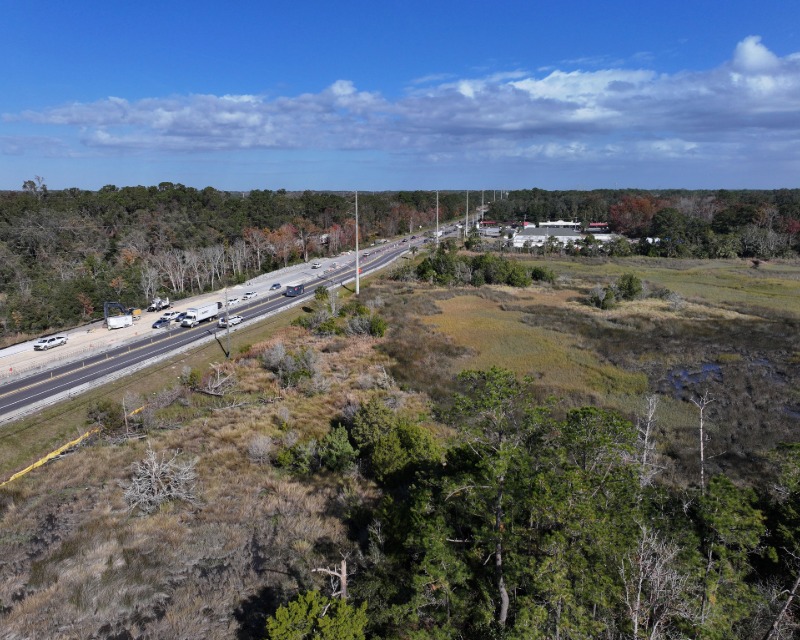
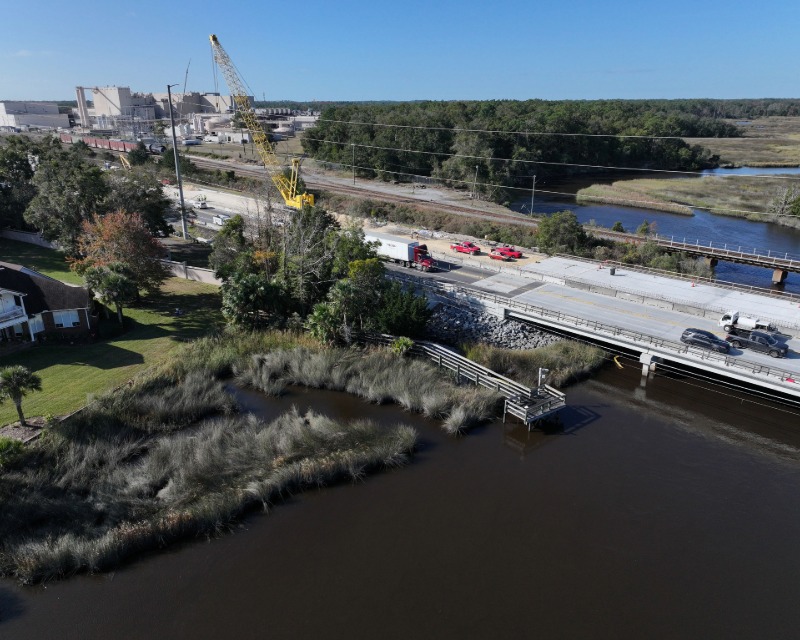
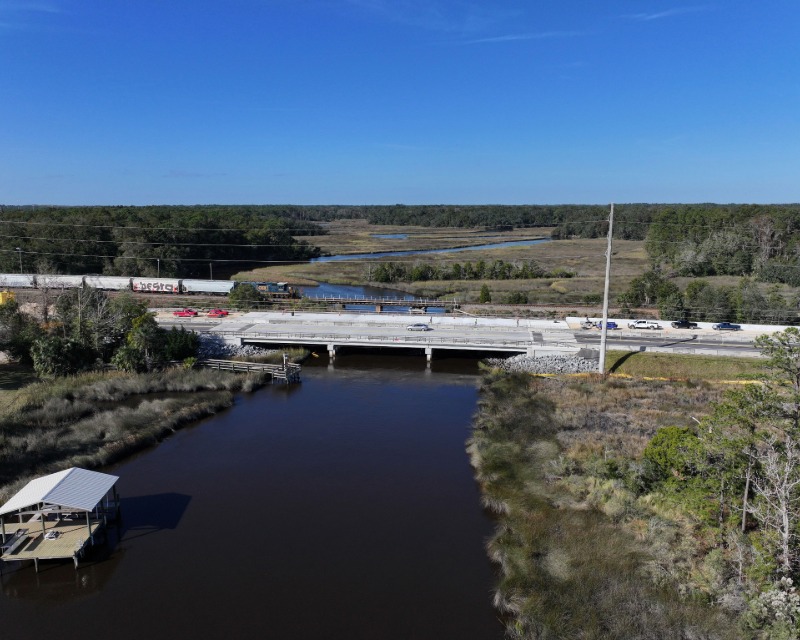
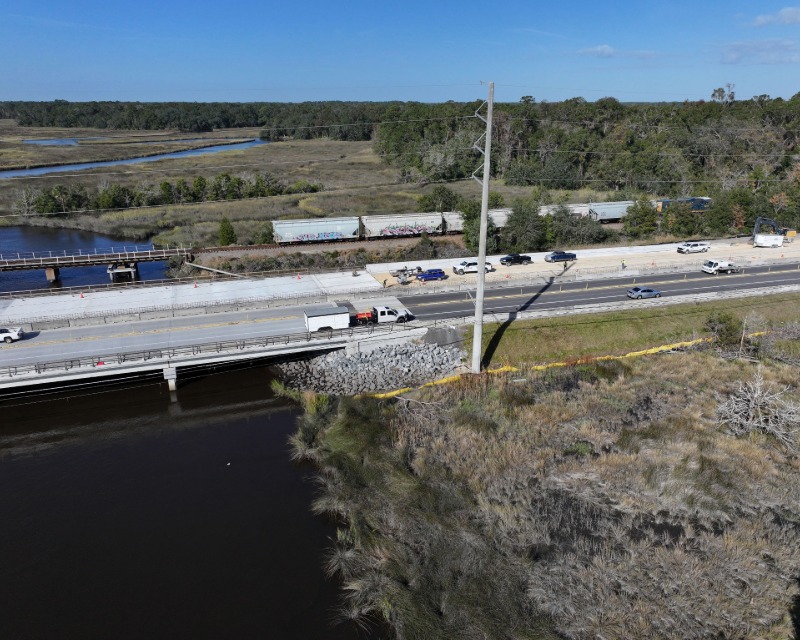
STV partnered with the Florida Department of Transportation (FDOT) to replace two aging U.S. 17 bridges over the Broward River with a single modern crossing that improves safety, mobility and multimodal access in north Jacksonville. Designed within a constrained coastal corridor adjacent to active rail infrastructure, sensitive wetlands and critical utilities, the project delivers a wider three-span bridge with enhanced pedestrian and bicycle facilities while maintaining traffic throughout construction. The new structure strengthens a key commuter and freight route, supports long-term regional growth and provides a more resilient connection for one of Jacksonville’s important transportation corridors.
What challenges did STV address?
For decades, the twin bridges carrying U.S. 17 (North Main Street) over the Broward River served as a vital connection between downtown Jacksonville and the city’s northern neighborhoods. By the time FDOT initiated the project, both structures were considered structurally deficient and functionally obsolete, lacking shoulders, pedestrian accommodations and other features needed to meet current design standards.
The project location introduced additional complexity. The bridges crossed a tidally influenced salt marsh and floodplain, requiring careful consideration of environmental impacts, coastal resiliency and wetland protection. At the same time, a nearby CSX freight rail line, high-voltage transmission lines and a pressurized industrial pipeline constrained available right-of-way and limited design options. Throughout construction, U.S. 17 also needed to remain open as a critical commuter and freight corridor.
What solutions did STV deliver?
Working with FDOT, STV led the design and engineering of a replacement bridge that consolidates the two existing structures into a single widened, three-span bridge carrying four travel lanes.
The new bridge incorporates modern safety and multimodal features, including a concrete median barrier, wider lanes, a dedicated bicycle lane and a pedestrian sidewalk. To improve long-term resiliency, STV evaluated coastal hydraulics, wave action and flooding conditions to establish appropriate bridge elevations capable of withstanding severe weather and storm surge events.
The team also developed innovative solutions to address environmental and corridor constraints. By shifting the roadway alignment slightly east, STV accommodated CSX railroad requirements while avoiding utility relocations. Careful planning of bridge pier locations, construction staging and crane operations minimized impacts to existing infrastructure. In addition, STV developed a phased maintenance of traffic plan that eliminated the need for a temporary detour bridge, reducing project costs, environmental impacts and community disruption.
How does this project benefit the region?
The Broward River Bridge Replacement improves safety, reliability and mobility along one of north Jacksonville’s key transportation corridors. Modern roadway design standards, crash-tested barriers, multimodal accommodations and improved flood resilience help create a safer and more accessible travel experience for motorists, pedestrians and cyclists.
The bridge’s flood-resilient design supports continued connectivity during severe weather events, while the consolidated structure reduces long-term maintenance requirements for FDOT. By maintaining traffic throughout construction and minimizing impacts to surrounding wetlands and infrastructure, the project demonstrates how transportation improvements can support regional growth while balancing environmental stewardship and community needs.
As Jacksonville continues to grow, the new crossing will provide a reliable transportation link that supports commuter travel, freight movement and economic development for decades to come.
Key stats and accolades
- Replaced two structurally deficient bridges with one modern three-span structure
- Carries approximately 20,000 vehicles daily
- Maintained at least one lane of traffic in each direction throughout construction
- Added dedicated bicycle lane and pedestrian sidewalk
- Designed to improve flood resiliency and withstand coastal storm events
- Alignment shifted to accommodate adjacent CSX rail operations
- Eliminated need for a temporary detour bridge, reducing environmental impacts and project costs
- Constructed within a sensitive tidal salt marsh environment